This is a site to save info that I want to savor and to just dink around with.
"[a]ny man who is under 30, and is not a liberal, has no heart; and any man who is over 30, and is not a conservative, has no brains." (Well, maybe 35; certainly 70.) So do the math and you'll guess my politics."( I am over 70!)
(Click on any picture to enlarge and make clearer, TRY THAT ON THE PICTURE OF THE BACK OF MY HEAD TO SEE MY TATTOO!)
Fear of Fritterware: In the unlikely event you end up with a W10 machine, search for ‘Make Windows 10 Great Again’ and then run it. It will take about 20 minutes on the first pass to delete the bloat, set up the spygate firewall settings, turn off cortana and a bunch of other things. Then you can go through and turn off all the stupidly configured scheduler updates.
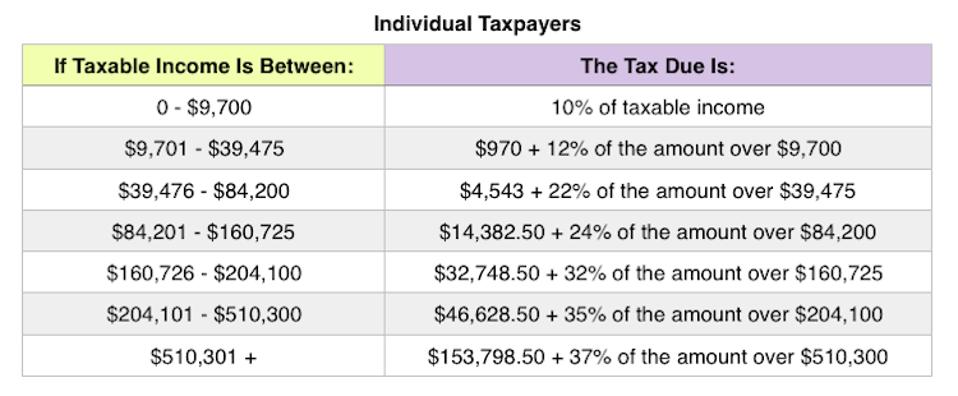
IRS Announces 2019 Tax Rates, Standard Deduction Amounts And More: Tax Brackets and Tax Rates.�The big news is, of course, the tax brackets and tax rates�for 2019. There are still seven (7) tax rates. They are: 10%, 12%, 22%, 24%, 32%, 35% and 37% (there is also a�zero rate). Here's how those break out by filing status:
In any age, the so-called progressives treat politics as their religion
The reason that "the so-called progressives treat politics as their religion" is because politics is their religion. They are millenarians, a world view defined as, "the belief by a religious, social, or political group or movement in a coming major transformation of society, after which all things will be changed" (Wikipedia)
"Congratulations to the Federal Reserve. You've successfully created the most extreme, pre-collapse yield-seeking bubble in U.S. history! With lower return prospects than Aug 1929. While encouraging a debt bubble where half of all 'investment grade' debt is one step above junk."
John P. Hussman
"All the world marveled at this, and gave their allegiance to the Beast. And they worshiped the dragon for giving such power to him. as they also worshiped the Beast. 'Who is as great as the Beast?' they exclaimed. 'And who is able to resist him?' The Beast was allowed to commit great blasphemies against God. And he was given the authority to do as he willed, but only for forty-two months."
Revelation 13:3-5
"Daniel answered the king, 'Keep your gifts or give them to someone else, but I will tell you what this means.
Number, number, weight, division. And this is what it means: number, God has numbered the days of your kingdom and will bring it to an end; weight, you have been weighed on the scales of justice and are found to be wanting; division, your kingdom will be divided up and given to others.”
"The blessed John the Evangelist lived in Ephesus until extreme old age [age 94 c 100 AD). His disciples could barely carry him to church and he could not muster the voice to speak many words. During individual gatherings he usually said nothing but, 'Little children, love one another.' The disciples and brothers in attendance, annoyed because they always heard the same words, finally said, 'Teacher, why do you always say this?' He replied with a line worthy of John: 'Because it is the Lord's commandment, and if it alone is kept, it is sufficient.'"
Jerome, Commentary on Galatians, based on the commentaries of Origen of Alexandria
How you turn your Windows laptop into a Mobile Wi-Fi Hotspot depends on which version of Windows you’re running. With Windows 10, it’s as simple as flipping a single switch that you can find at Settings > Network & Internet > Mobile Hotspot. In Windows 7 or 8, you’ll need to install a free tool named Virtual Router to get the job done. Macs, on the other hand are not able to share a single Wi-Fi adapter. Each adapter can either be connected to a Wi-Fi network or hosting its own network, but not both. To turn your Mac into a mobile Wi-Fi hotspot, you’ll need to purchase an inexpensive USB Wi-Fi adapter. After that, though, all the tool you need to share your Mac’s Wi-Fi connection are built right in.
One wonders if the unique American experiment in liberty is already too far gone to save. One must wonder if Lady Liberty is just a zombie, unaware she is dead as she wanders the landscape. Many of our elitist punditry class say that our current separation is due to a stark partisan divide – but in my observation, that separation is at a far more fundamental level and when understood, explains much of our current crisis.
The separation is due to the segregation of Americans into two groups – the first are people who define their political objectives by their principles, the second are people who define their principles by their political objectives.
The former group tends to be more consistent in policy over time and tends to demonstrate more logic and reason in their positions. They tend to value originalism in interpretation of the Constitution and oppose judicial activism. Their actions tend to be bounded by tradition and history as their reality is based on a factual perspective of what worked and what didn’t – that doesn’t mean that they won’t push boundaries, just that they take observed results into consideration before they do.
The latter group, those who define their principles based on their political objectives are historically the most dangerous to a system of liberty and they are always the most susceptible to the seductive siren call of collectivism (which includes socialism, Marxism, and communism) because this is the way collectivism works. Collectivism always begins with an objective, then a plan, then total subservience to the plan.
Here’s the problem – total subservience to a plan means total obedience to both the plan and to the managers of that plan – the government. That subservience also means the end of truth, the end of morality, the end of America’s Bill of Rights.
F.A. Hayek stated:
“Collectivism means the end of truth. To make a totalitarian system function efficiently, it is not enough that everybody should be forced to work for the ends selected by those in control; it is essential that the people should come to regard these ends as their own. This is brought about by propaganda and by complete control of all sources of information.”
And from the death of truth, follows the rest.
In such a regime, there can be no free press or freedom of speech because public criticism or even expressions of doubt must be suppressed because they tend to weaken support of the regime. People must forgo their values. They must be convinced to adopt whatever values are necessary for the success of the plan – and the easiest way to do that is to redefine the language so that people can be persuaded that they are really the same values as those they have always held, but were not properly understood or recognized (until now).
Total subservience also means an end to morality (and any religion that establishes a moral code) because nothing must stand in the way of the success of the plan, people must be prepared to break every moral rule they have ever known if this seems necessary to achieve the success of the plan. People must accept and adopt a willingness to do immoral things and when they do, the motivating principle is “the ends justify the means” (the denial of all morals) necessarily becomes the supreme rule, in service of which all other things must fall away. Hayek noted that:
“There is literally nothing which the consistent collectivist must not be prepared to do if it serves “the good of the whole,” because that is to him the only criterion of what ought to be done. Once you admit that the individual is merely a means to serve the ends of the higher entity called society or the nation, most of those features of totalitarianism which horrify us follow of necessity. From the collectivist standpoint intolerance and brutal suppression of dissent, deception and spying, the complete disregard of the life and happiness of the individual are essential and unavoidable. Acts which revolt all our feelings, such as the shooting of hostages or the killing of the old or sick, are treated as mere matters of expediency; the compulsory uprooting and transportation of hundreds of thousands becomes an instrument of policy approved by almost everybody except the victims.”
Reasonable people can compare Hayek’s words to our current history and decide for themselves if what I propose is valid. Hayek’s observations of how the UK and Europe fought totalitarianism and then voluntarily succumbed to collectivism in the aftermath of WWII is more relevant today than ever – therefore, we close with a Hayek quote:
“The worst sufferer in this respect is the word ‘liberty.’ It is a word used as freely in totalitarian states as elsewhere. Indeed, it could almost be said that wherever liberty as we know it has been destroyed, this has been done in the name of some new freedom promised to the people. Even among us we have planners who promise us a ‘collective freedom,’ which is as misleading as anything said by totalitarian politicians. “Collective freedom” is not the freedom of the members of society but the unlimited freedom of the planner to do with society that which he pleases.”
New cystic fibrosis drug Trikafta could make deadly disease manageable - The Washington Post: A new cystic fibrosis therapy dramatically improved patients’ lung function and showed clear signs of targeting the genetic root of the disease, instead of just alleviating symptoms — a breakthrough so long-sought that many doctors and patients are moved to tears when talking about it.
Marriage isn’t hard like a marathon, where you run and you train and you run some more. It’s not about solo endurance. It’s not about two people working tirelessly to accomplish a goal, it’s not about training for and accomplishing what I want.
Marriage can very much be about growth and change and getting through the difficulties. But it can also be about enduring the same difficulties year after year with zero change. It can be about love and happiness. But it can also be about tolerance and frustration.
Marriage is like being in a canoe with my spouse. I can paddle my little booty off (ok, lets not kid ourselves, my booty isn’t little) but if my spouse isn’t paddling just as hard in the exact same direction, all that I will accomplish is paddling us in circles. My spouse and I have to decide what we can and will do TOGETHER. Let that little nugget sink in.
I can’t go anywhere in marriage without him. I’m stuck in this blasted canoe. If I ask him to just rest, I’ll direct our boat, I will tire quickly and likely become resentful. If I try to convince him to paddle with me, then maybe he will, but maybe he won’t. Maybe he doesn’t want to go that fast, maybe his arms are tired, maybe he doesn’t know how to paddle.
When I entered this marriage I thought it was about two people coming together and running the marathon of life together. Each separate, but each equally dedicated, each pushing and us finishing together. But somehow I ended up in a canoe with someone that doesn’t canoe the way I do. Our goal may be the same, but our way of getting there is so incredibly different. I’m a fast paddler, I want to push and grow and move through life quickly. I am constantly looking around to see what I can do to make things better, should this ice-chest be right here? What if we moved it over there, would we move faster?? I’m a fixer, a doer, a grower, all at very fast paces. I’m constantly evaluating and reevaluating things to optimize. My partner is not so. He just wants to let the water carry us, he wants to paddle when it’s necessary, and conserve his energy. He is patient and slow moving, deliberate in his decisions, often taking much longer than I’m comfortable with.
My biggest surprise in marriage has been that just because I think something is right, essential, necessary, and the way things need to be, doesn’t mean that’s the way we paddle our canoe.
Crossing the Street, Riding a Bicycle, Kills More Americans than Rifles Do
Scott Olson/Getty
3:40
The left’s relentless push to ban commonly-owned semiautomatic rifles under the guise of safety overlooks the fact that Americans face numerous things that cause exponentially more death than rifles on a daily basis.
Consider Centers for Disease Control and Prevention (CDC) statistics from 2017, the most recent year of complete data. The total number of firearm-related deaths was 39,773. Roughly two-thirds of that figure, 23,854, were firearm-related suicides, with the remaining 15,919 being a combination of the approximately 500 accidental gun deaths that occur annually coupled with just over 15,000 firearm-related homicides.
If we break down the firearm-related homicides via FBI crime statistics, we see that handguns were far and away the common firearm for murder. The FBI reported 7,032 murders with a handgun verses 403 murders with a rifle, and 264 with a shotgun, in cases where the firearm was identifiable.
If we take the 403 rifle murders a year and divide by 365 it comes out to 1.1, which means 1.1 Americans die in a rifle-related murder each day. We must not overlook the fact that the 403 murders with a rifle are murders with rifles of all kinds, i.e., bolt action, lever action, breech action, pump, and semiautomatic. If we narrowed the category to only include AR-15s, AK-47s, or similar semiautomatics, the number of Americans killed daily would be even lower than 1.1.
Now, with the aid of charts released by the CDC, as well as CDC special reports, studies by schools such as Johns Hopkins University, crime statistics from the FBI, and coverage from Breitbart News, consider 10 other causes of death that literally eclipse the number of daily deaths involving a rifle:
For those who argue that rifle deaths ought to be compared to deaths by other voluntary activities, rather than disease, consider the following six examples:
https://twitter.com/i/status/1169002807514603520 True Love ver1
“Love is not love Which alters when it alteration finds, Or bends with the remover to remove: O no; it is an ever-fixed mark, That looks on tempests, and is never shaken; It is the star to every wandering bark, Whose worth’s unknown, although his height be taken.”
“Love’s not Time’s fool, though rosy lips and cheeks . . .”
Can Europeans, and European women in particular, become objects of trade? The idea seems laughable, since the term ‘slave trade’ almost always brings Africans to mind. Yet there was a time not so long ago when Europe exported white slaves on a large scale to African
These slaves were taken during hit-and-run raids by either Crimean Tatar horsemen or North African corsairs. A raiding party would typically descend on an isolated village and carry away its inhabitants—or rather those who were commercially useful, particularly young women and young boys.
There was a time farther back when Europeans were accomplices in this trade and when it provided most of their foreign exchange. This was during the Dark Ages and the early Middle Ages, specifically the 8th to 12th centuries.
The Slave Market, painting (c. 1884) by Jean-Léon Gérôme
5th CENTURY
The slave trade was a godsend for the elites of France, Germany, and Italy. With the collapse of the Western Roman Empire in the 5th century, they had to dip into their gold reserves to buy foreign luxury goods from the Middle East, generally clothing, upholstery, tapestries, carpets, and other precious fabrics (Skirda, 2010, pp. 56-57).
8th CENTURY
By the 8th century, these reserves had been almost completely exhausted. Gold was giving way to silver, and even that medium of exchange was being debased. Western Europe had largely reverted to an economy of autarky, its shrunken towns and cities no longer major centers of trade. Most people produced everything they needed within their local village or manor.
Would Western Europe have eventually returned on its own to an international trading economy? Perhaps, although revival of trade would have become more difficult once the elites had become accustomed to autarky. As things turned out, they found the means to buy foreign luxury goods almost at the same time their gold reserves ran out.
ISLAMIC EXPANSION TO EUROPE
The 8th century brought the rapid expansion of a new civilization, Islam, into the Middle East, North Africa, and Spain. Its Arab elite was darker-skinned than the Greco-Roman or Visigothic elites it displaced. It was also more polygynous. A new market had come into being, a market for wives and concubines. European women were especially sought after, not because they were exotic but because their fair skin and fine facial features corresponded to notions of beauty that were indigenous to Arab culture. Initially, this trade involved prisoners of war captured during the Islamic wars of expansion. Soon, however, a peaceful trading relationship developed.
It was officially prohibited by Christian emperors and popes alike, but in reality, people closed their eyes and everything was tolerated in exchange for good gold dinars. Needless to say, this trade would have been impossible without the active collaboration of local elites. They were the main beneficiaries.
JEWS IN MUSLIM SPAIN
Jews played an extraordinarily important role in the development of medieval European society. Besides of popular engagement in the slave trade, the significant advances in agrarian techniques and the resulting agricultural surplus led to the rise of cities and increased urban populations. This in turn paved the way for the opening of international trade routes and the creation of wealth on a scale not seen since the heyday of the Roman Empire. Jewish merchants occupied a critical segment of this international trade, facilitated by the far-flung networks of friends and family connections inherent in the broad geographic distribution of Jews in the Diaspora. The earliest Jewish trading routes extended from the Atlantic shores of France to the Pacific shores of China. Jewish merchants primarily carried commodities that combined small bulk and high demand, including spices, perfumes, jewelry, and silk.
Under Islam, Jews were allowed to practice their faith and live according to the laws and scriptures of their community. During most of the 10th and 11th centuries, a period known as the “Golden Age,” Jewish community flourished in Islamic Spain. Jews achieved hitherto unknown heights in fields of philosophy, astronomy, mathematics, and linguistics. Under Muslim rulers, Jews served in prominent governmental and military positions. However and it should be noticed, Jews were influencial part of european society long before Muslim conquered Spain. Long before 10th century Jews ruled the Khazar Khaganat that was later annexed by Russia in the 9th century. Khazars were Jews. Their correspondence with Spanish Jews in Hebrew language is still kept in archives. All correspondence was written in Hebrew language obviously.
Old Bible was written in Hebrew language. In the first millennium the Bible was translated from Hebrew to Latin and to Greek and it had the impact to the formation and development Latin language and later to development of all Slavic languages. Jews was only the nation in Europe that had a total literacy in the medieval history therefore they was in charge of chronicles all over Europe and Middle East. They translated Bibles to European languages and to Greek language. Hebrew speakers hold all key positions in the medieval period. All Christian monks and other Christian clerks have studied Hebrew in seminaries, many of them were Jews that have had converted to Christianity, Hebrew was their mother tongue.
Jewish financial success was particularly due to the enmity between Christianity and Islam. Since Islamic states of the Middle East and Christian kingdoms of Europe often banned each other's merchants from entering their territories, the Jewish merchants and traders functioned as neutral intermediaries and translators, keeping open the lines of communication and trade between the lands of the old Roman Empire and the Far East. The question is how people communicated during the medieval trade?
Hebrew was a lingua franca
Hebrew was an international language in medieval period. Here is two linguistic examples show the impact of Hebrew language during middle ages:
Hebrew root of Russia. The word [Rus/Ros] is Greek form of Hebrew word [ראש] means the head, the leader, the ruler. Kievan Rus practiced Judaism before adopted Christianity. Rus as the name of the country had appeared in chronicles only after Kiev was conquered by Ruriks in 9th century. At the time of Rurikis conquered Kiev in 9th century, Novgorod still practiced paganism. However Kiev was Jewish already for centuries before Ruriks defeated Khazarian Kaganat and conquered Kiev, the city practiced Judaism. Kiev was jewish city because Khazars, owners of Kiev, were jews
Etymology of the word slave. It came from the Hebrew word [צלב - tzlav] meaning “the cross” referred to the Christian cross and to Christianity. In arabic the cross is pronounced [slab] similar to Hebrew. From that roottwo Latin words has been delivered: slave and celebration. 1400 years ago the terms “christianity”, “christians” as definition of people who believed in Jesus were not widely spread in Europe yet. So when African and Arabic pirates captured european people from the shore areas of Italy or Spain they identify them according to the presence of the cross on the chest [tzlav or slab]. However at the same time for the word glorification in English we have synonym Latin word celebration that shares the very same Semitic root [Heb:- tzlav] or [Arab: - slab] with slave that mean the cross as a symbol of Christianity. Later, toall slavic languages that word was reflected as theGlory - [Rus. - Slava] .
Map of Cologne, Hartmann Schedel, Liber Chronicarum, Cologne, A. Koberger, 1493.
SLAVE TRADERS JEWS AND VIKINGS
There were 3 groups of European slave traders:
Vikings. The northern route, via the Baltic, was run by Viking traders. While the Vikings are perhaps best known for accumulating wealth through plunder and conquest, they were also skilled and successful traders. The Vikings developed several trading centres both in Scandinavia and abroad as well as a series of long-distance trading routes during the Viking Age. The Viking economy and slave trade network also effectively helped rebuild the European economy after the fall of the Roman Empire.
Radanites. Jewish medieval merchants were known as “Radanites.” Radanites were the ones who controlled the western overland route from the Eastern territories to Muslim Spain via Germany and France. In the Western Europe most medieval Jews resided in Spain. The term “Radanites” was derived from the name of the Muslim-Christian border along the river Rhone (in Latin Rodanus) because of an intense slave trade which was conducted across it. An alternate origin of the term “Radanite” was a Persian word for those who “knew the way.” This explanation was related to the leading role of Jewish merchants in trade after the fall of the Roman Empire.
Khazars. The various eastern routes, via the Dnieper, the Don, and the Volga, were run by either Viking or Khazar traders. Khazars were Jewish also. The capital of Khazaria, Itil, was an important Jewish trading center. Jewish merchants played an important role in international trade after the fall of the Roman Empire. For two centuries they made Hebrew the only language of world commerce.
All three trading groups worked with each other, particularly the Radanites and the Khazars (turks who converted to Judaism).
From the 7th century to mid-10th century Radanites controlled the trade which encompassed Western Europe, Africa and China. It was a period when Hebrew was the only language of world trade. Slavery, which was the foundation of the Roman economy, was important in the Arab Empire in which the Jews became the main merchants, trading with the infidels
SLAVE TRADE IN THE EASTERN EUROPE
Poland. Commonwealth. Russia
In 11th century in Poland, Jews in service of Boleslav the Great minted his coins and inscribed on them the name of the Polish sovereign with Hebrew letters. Besides such highly valued craftsmen business Jews were engaged in profitable slave-trade business.
The Catholic Church
The Catholic Church fought against slavery and this fight is documented in the treatise “Infelix Aurum” by the first patron saint of Poland, and since A.D. 997 the first bishop of Gdansk, Adalbert or Wojciech . In the struggle against the slave trade the family of St. Adalbert lost the Czech throne in Prague to their opponents supported by Jewish slave traders. One of 18 sculptures on the 1170 bronze door made for the cathedral of Gniezno depicted the scene of redeeming manacled Christian slaves by a Polish bishop from Jewish merchants in the presence of the son of King Boleslaus the Great, the second formally crowned King of Poland, Mieszko II (990-1034).”
As described in the book "Sulejman the Great", the constant Tatar raiding and counter-raids by Cossacks and Polish magnates were everpresent issue in Polish-Ottoman relations in XVI century. While reading the description, it's almost boring: the year so-and-so Tatars raided villages, they cavalry hit them and recaptured part of captives; the same year conterraid hit Oczakow, killing Tatars and recapturing slaves. The next year another Tatar raid hit so-and-so areas... and so it went for a hundreds of years... Tatar raiding to Poland and to Russia continued till 18th when Catherine The Great annexed Crimea and ended slavery practice.
One of such kidnapped girls was Hürrem Sultan
Photo: Hürrem Sultan in the popular Turkish TV series.
Hürrem Sultan, the wife of Süleyman the Magnificent was Russian girl, daughter of the Orthodox priest, was kidnapped and sold to the slavery from her little town in the Kingdom of Poland. She became the wife of Ottoman emperor. Her original name was Alexandra Lisovska. Raised as a Christian Orthodox, he was made to convert to Islam to enter the harem, the royal household in which hundreds of women were held in servitude to the sultan. She was kidnapped by CrimeanTatars. The typical business of Crimean Tatars until 18th century was kidnapping people to sell them to the slavery.
200 years later another remarkable woman, the Russian empress Catherine The Great came to power, she liberated thousands enslaved Russians from Tatar yok by annexing Crimean peninsula. She ended up that degraded slave-trade business once and forever
Paintings by Johann Baptist von Lampi der Ältere. Catherine II. Despite being born Lutheran, after convertion to Orthodox Christianity she became most fervent defender of Russianness everywhere she stepped her foot .
SLAVE TRADE IN THE WESTERN EUROPE
In the 11th century the main slave market was in Arabic Spain, then the most civilized country in Europe.
France and Italy
The white slaves were castrated in Verdun, Venice, and Lyon and sold by slave-traders to Spain. This slave trade also included girls and small boys who were properly indoctrinated in order to be used later by Arab rulers as bodyguards, slave soldiers and bureaucrats.
Only the adolescent boys and girls were spared, enslaved, and immediately sold to the merchants accompanying the armies. The Barbarian was able to get gold by trading in slaves. These objects of servile trade and commerce would be integrated into harems and used as military slaves or eunuchs. Adults and children were eliminated for obvious reasons. They did not correspond to the Muslim demand for young virgin girls and beardless boys and it was out of the question to gather children and raise them. The traders had neither the time nor the willingness and more importantly it would not have been cost-effective. Later, they would spare the lives of more captives, by selecting them according to their capacities for productive work and by using them to the limit of their strength at laborious physical tasks (Skirda, 2010, pp. 85-86).
The captives were taken overland by various routes: through Germany and France to Muslim Spain; through Venice and by ship to the Middle East; or down the Dniepr, the Don, or the Volga to the Middle East via the Black Sea or the Caspian. How many were traded? It’s difficult to say, but Skirda (2010, p. 6) advances a figure between several tens of thousands and several hundreds of thousands for the period extending from the 8th to 12th centuries.
It was this trade, more than anyother, that revived the old trading networks not only between Europe and the Middle East, but also within Europe itself. The balance of foreign exchange also shifted in Europe’s favor, thus giving the elites of France, Germany, and Italy the means to buy not only foreign goods but also local products, thereby stimulating a long economic recovery that would take Europe out of the Dark Ages. As Skirda notes ironically:
“The Italians who were the “great initiators of Europe” became the promoters of trading companies, creators of credit, restorers of currency. It is easier to understand why almost all historians and commentators have silently observed this phenomenon. It is difficult for them to acknowledge that the economic renaissance of the West of the 10th and 11th centuries was achieved through human trafficking!“ (Skirda, 2010, p. 112)
Islamic Spain was the main market for slaves (eunuchs, girls, and young boys). Slavery which was the foundation of the Roman economy was important in the Arab Empire. Some slaves were sold as far away as China, which also bought furs, beaver skins, silk, and weapons. Exports from China to Europe included cinnamon, spices, musk, and camphor.
Western Europe exported over a million slavesbetween 1530 and 1780 (Davis, 2004). Between 1500 and 1650 Eastern Europe exported 1.5 million slaves to Africa, the Middle East and Asia (Fisher, 1972; Kolodziejczyk, 2006).
England
Slavery existed in England in the 11th century - Domesday book records how many slaves in each village. The Norse and Vikings had their 'thralls'. In 11th century Bristol shipped English slaves to the Viking city of Dublin - the then Bishop of Worcester, St Wulfstan, preached against the trade.
Scandinavia
Enslaved by Vikings people were called thralls in Old Norse language. As many as 10% of the population of Scandinavia were thralls, according to the Norwegian researchers. Most of thralls were local Scandinavian people. They can have been kidnapped or captured during Viking raids and forced into slavery. Or they can also have simply sunk into debts and had to meet their obligations by entering into lifelong slavery. Thrallhood was inherited by maternal bloodline: if mother was a thrall then child will be a thrall even if father was a freeman; if mother was a free woman then child will be freeman even the father was a thrall. Scandinavia abolished thralldom the 14th century
Some thralls were imported to Scandinavia from the Islamic world. In Viking Raids, slaves and captives were usually of great importance for both the monetary and labor value. In addition to being bought and sold, thralls could used to pay off debts as well, and were often used as human sacrifices in religious ceremonies. A slave's price depend on their skills, age, health, and looks. Many pagan and christian thralls were sold by the vikings to the Caliphate because of the high demand.
Vikings called themselves Rus and they were founding fathers of Kievan Rus'. The Arab traveller ibnFadlan described these Vikings as follows:
I have seen the Rus as they came on their merchant journeys and encamped by the Itil. I have never seen more perfect physical specimens, tall as date palms, blond and ruddy; they wear neither tunics nor caftans, but the men wear a garment which covers one side of the body and leaves a hand free. Each man has an axe, a sword, and a knife, and keeps each by him at all times. The swords are broad and grooved, of Frankish sort.
Ireland
In Northwestern Europe in the Viking Age Dublin was the center of the Slave trade,
Iceland
Guðríður Símonardóttir was an Icelandic woman who was one of 242 people abducted from the Westman Islands, Iceland in a raid by Barbary pirates. These raids came to be known as the Turkish abductions and Guðríður became known as Tyrkja-Gudda. After being held as a slave and concubine for nearly a decade, she was one of a few captives ransomed by the Danish king. She returned to Iceland, marrying the young pastor Hallgrímur Pétursson. The story of "Gudda The Turk". http://en.wikipedia.org/wiki/Gu%C3%B0r%
Estimated exchange rates at the beginning of the 11th century in Iceland were:
8 ounces of silver = 1 ounce of gold;
8 ounces of silver = 4 milk cows;
8 ounces of silver = 24 sheep;
12 ounces of silver = 1 adult male slave.
The Barbary Corsairs raided northern Europe for slaves on many occasions.
Painting Giulio Rosati, Inspection of New Arrivals, 1858-1917, Circassian beauties. In French, “la traite des Blanches”. The English translation, "white slave trade", the term is often used as a synonym for international prostitution in the present time.
Photo:Group of white slaves in Germany. 1942. Slavery may never vanish. Nazi Germany re-instituted white slavery from the Bay of Biscayne to the Bering Sea in 1941.
DEMOCRACY and EUROPEAN UNION
Surprisingly, but along with barbarian traditions of slavery and human sacrifice, medieval Europe had practiced democracy, elections and no-border society from London to Moscow, something that we can only dream about. Also European Union was established. As you can see that Dark Ages was not so dark and for some countries it was Golden Ages.
Open border society. All europeans were mobile and they all the time moved from the place to another without visas. 1000 years ago in Europe borders did not exist between countries. Visas, border officers passports did not exist in Europe and the concept of ethnics or nationalities did not exist. Europeans were divided only by religion, by language and loyalty to king, not by ethnics. People moved freely in Europe from Dublin to Moscow. In the medieval period Europeans had much more freedom of movement than modern Europeans. Varangians (proto-russians) are a good example of the mobility and travels of peoples from one end of the continent to another, meaning that Celts, Germanics, Goths, English, Latinates, Huns and God knows who else wandered all over the Europe and freely without visa moved all over the territory , rendering the idea of any specific area of Europe belonging to any specific ethnic meaningless.
Democracy. Russia had a democracy during the medieval time. Veche was a Russian democratic parliamentary form of state administration (legislative power) in the Novgorod Republic since 862 till 1478. Rus have had democratic forms of government, including those inherited from the predating Kievan Rus period. The Novgorod parliament had legislative power, the parliament could fire unwanted Prince and hire new one, parliament managed finances, declared war and made peace, claimed treaties with foreigners, led the court on political and official crimes etc. In 862 Novgorod veche made a contract with Rurik.
Elections. France had democratic election in the 11th century. The election by a voting body facilitated the peaceful transference of power, even if such decisions also considered the privileges of birth and rank, as well as the requirements of the church. Under canon law, medieval people were guaranteed certain human rights, including welfare rights, the right of certain classes to vote, and religious liberty
Hanseatic League
European Union was existed in the medieval period for 400 years in the form of Hanseatic league, and was controlled by German city of Hansa. The Hanseatic League was a farefather of modern European Union. The idea of EU is very old and always was managed by Germany. Hanseatic league was a commercial and defensive confederation of merchant guilds and market towns in Northern Europe. It was a powerful economic and defensive alliance that left a great cultural and architectural heritage. The towns participants of alliance raised their own armies, with each guild required to provide levies when needed. The Hanseatic cities came to the aid of one another, and commercial ships often had to be used to carry soldiers and their arms. Growing from a few North German towns in the late 1100s, the league included 170 cities and came to dominate Baltic maritime trade for three centuries along the coasts of Northern Europe from London to Moscow. Notably Novgorod, was a major Russian trade partner of the Hansa in the Middle Ages.
Exploratory trading adventures, raids, tourism and piracy had occurred early throughout the Baltic region; the sailors of Gotland sailed up rivers to Novgorod. Lübeck became a base for merchants from Saxony and Westphalia trading eastward and northward. This area was a source of timber, wax, amber, resins, and furs, along with rye and wheat brought down on barges from the hinterland to port markets.
Main trading routes of the Hanseatic League
Visby- Novgorod alliance
Long before Hansean league was established, Scandinavian city of Visby functioned as the leading trade centre in the Baltic since 10th century. In 1080 AD, Visby merchants established a Scandinavian trading post Gutagard-Gotenhof in Russian city of Novgorod. International trade in the Baltic area before the Hanseatic League was led by Scandinavians, who established major trading hubs at Birka, Haithabu, and Schleswig by the 9th century.
Later merchants from Holy Roman empire also stayed in Novgorod. In 1220s Germans established their own trading station “Kontor” Peterhof not far from Novgorod. In 1229 German merchants were granted certain privileges that made their positions more secure in Russia.
Painting: Georg Giese from Danzig, 34-year-old German Hanseatic merchant at the Steelyard, painted in London by Hans Holbein
THE FATE OF BARBARY STATES AND PIRACY
Barbary States, term used for the North African states of Tripolitania, Tunisia, Algeria, and Morocco. From the 16th century Tripolitania, Tunisia, and Algeria were autonomous provinces of the Turkish Empire. Morocco pursued its own independent development. The corsair Barbarossa and his brothers led the Turkish conquest to prevent the region from falling to Spain. A last attempt by Holy Roman Emperor Charles V to drive out the Turks failed in 1541. The piracy carried on thereafter by the Muslims of North Africa began as part of the wars against Spain. In the 17th and 18th cent., when the Turkish hold on the area grew weaker, the raids became less military and more commercial in character. The booty, ransom, and slaves that resulted from attacks on Mediterranean towns and shipping and from occasional forays into the Atlantic became the main source of revenue for local Muslim rulers.
All the major European naval powers made attempts to destroy the corsairs, and British and French fleets repeatedly bombarded the pirate strongholds. Yet, on the whole, countries trading in the Mediterranean found it more convenient to pay tribute than to undertake the expensive task of eliminating piracy. Toward the end of the 18th cent. the power of the piratical states diminished. The United States and the European powers took advantage of this decline to launch more attacks. American opposition resulted in the Tripolitan War. After the Napoleonic wars, European opinion clearly favored destroying the pirates. In 1816 Lord Exmouth with an Anglo-Dutch flotilla all but ended the naval power of the dey of Algiers. An ultimatum from the European Congress of Aix-la-Chapelle (1819) compelled the bey of Tunis to give up piracy.
The fate of european slaves in Africa
Many slaves converted to Islam. That means they only were 'freed from the Oar, but not from their Patron's Service.' Christian girls who had been taken into the pasha's harem often 'turned Turk' to stay with their children, who were raised as Muslims.
Christian men, after converting to Islam, sought easier labours, usually as overseers for other slaves, and some gained real power and occasionally their freedom. Between 1580 and 1680, there were typically around 15,000 of these 'renegades' in Barbary, including around half of the corsair captains, or re'is, and even some of the pashas. Most had probably never been slaves, however, but had come to Africa looking for opportunity, and had cast off their Christianity along with their earlier lives.
The legacy of enslavement
Slaves in Barbary states could be black, brown or white, Catholic, Protestant, Orthodox, Jewish or Muslim. In the 1600s, no one's racial background or religion automatically destined him or her for enslavement. Preachers in churches from Sicily to Boston spoke of the similar fates of black slaves on American plantations and white slaves in corsair galleys; early abolitionists used Barbary slavery as a way to attack the universal degradation of slavery in all its forms.
This may require that we rethink our belief that race was fundamental to pre-modern ideas about slavery. It also requires a new awareness of the impact of slave raids on Spain and Italy - and Britain - about which we currently know rather less than we do about slaving activities at the same time in Africa. The widespread depopulation of coastal areas from Malaga to Venice, the impoverishment caused by the kidnapping of many breadwinners, the millions paid by the already poor inhabitants of villages and towns to get their own people back - all this is only just beginning to be understood by modern-day historians.