Big Science is broken: Menu
Subscribe
Give a gift
Digital subscription
Monday, April 18, 2016


Sunday, April 17, 2016
We Don’t Have to Live Like This – PA
We Don’t Have to Live Like This – PA: 2 Corinthians 4:16-18. For which cause we faint not; but though our outward man perish, yet the inward man is renewed day by day. For our light affliction, which is but for a moment, worketh for us a far more exceeding and eternal weight of glory; While we look not at the things which are seen, but at the things which are not seen: for the things which are seen are temporal; but the things which are not seen are eternal.
The Top 40: April 2016 Archives
The Top 40: April 2016 Archives: It bears repeating....
My favorite part about the Obama era is all the racial healing.
My favorite part about the Obama era is all the racial healing.
AMERICAN DIGEST: Comment on There Is No Other Stream
AMERICAN DIGEST: Comment on There Is No Other Stream:
Further Up and Further In, which is a literature based study using The Chronicles of Narnia
Further Up and Further In, which is a literature based study using The Chronicles of Narnia
James LePore Fiction Ivictus
Invictus
Out of the night that covers me,
Black as the pit from pole to pole,
I thank whatever gods may be
For my unconquerable soul.
In the fell clutch of circumstance
I have not winced nor cried aloud.
Under the bludgeonings of chance
My head is bloody, but unbowed.
Beyond this place of wrath and tears
Looms but the Horror of the shade,
And yet the menace of the years
Finds and shall find me unafraid.
It matters not how strait the gate,
How charged with punishments the scroll,
I am the master of my fate,
I am the captain of my soul.
William
Ernest Henley lost his left leg to arthritic tuberculosis when he was
nineteen. Four years later he was told that his right foot had to come
off. Although he was told he would die if he did not have this second
amputation, he refused, and instead put himself in the hands of a
physician who had developed new but untried methods, including a
radically new surgery, to arrest, if not cure, the disease. He spent
three years in hospital taking this treatment, during which he wote Invictus. He did not lose his right foot, and lived another thirty active years.
I believe
that when Henley made his decision to either die or save his right
foot, he stepped into a dimension of time and space that very few of us
ever have to contemplate entering, an arena where fear and courage do
battle, and in which there is no loser. Entering this dimension defines
you forever and sets you free.
The five novels in my Invictus Cycle are
connected by the simple but endlessly reverberating decision that the
central characters in each book must make: to live free or die.
connected by the simple but endlessly reverberating decision that the
central characters in each book must make: to live free or die.
Friday, April 15, 2016
Merle Haggard - I Still Can't Say Goodbye. wmv - YouTube
Merle Haggard - I Still Can't Say Goodbye. wmv - YouTube: I Still Can't Say Goodbye
Song about fathers
Song about fathers
Thursday, April 14, 2016
Wednesday, April 13, 2016
Curmudgeonly & Skeptical presents Boned Jello
Curmudgeonly & Skeptical presents Boned Jello:
Joke
I used to know a really good joke about Jonestown,
but the punchline was too long.
Joke
I used to know a really good joke about Jonestown,
but the punchline was too long.
The Top 40: Comment on Ye Not So Old Pencil
The Top 40: Comment on Ye Not So Old Pencil: Ye Not So Old Pencil
I, Pencil My Family Tree as told to Leonard E. Read↩
I am a lead pencil—the ordinary wooden pencil familiar to all boys and girls and adults who can read and write.∗
Writing is both my vocation and my avocation; that's all I do.
You may wonder why I should write a genealogy. Well, to begin with,
my story is interesting. And, next, I am a mystery—more so than a tree
or a sunset or even a flash of lightning. But, sadly, I am taken for
granted by those who use me, as if I were a mere incident and without
background. This supercilious attitude relegates me to the level of the
commonplace. This is a species of the grievous error in which mankind
cannot too long persist without peril. For, the wise G. K. Chesterton
observed, “We are perishing for want of wonder, not for want of
wonders.”
I, Pencil, simple though I appear to be, merit your wonder and awe, a
claim I shall attempt to prove. In fact, if you can understand me—no,
that's too much to ask of anyone—if you can become aware of the
miraculousness which I symbolize, you can help save the freedom mankind
is so unhappily losing. I have a profound lesson to teach. And I can
teach this lesson better than can an automobile or an airplane or a
mechanical dishwasher because—well, because I am seemingly so simple.
Simple? Yet, not a single person on the face of this earth knows how
to make me. This sounds fantastic, doesn't it? Especially when it is
realized that there are about one and one-half billion of my kind
produced in the U.S.A. each year.
Pick me up and look me over. What do you see? Not much meets the
eye—there's some wood, lacquer, the printed labeling, graphite lead, a
bit of metal, and an eraser.
Innumerable Antecedents↩
Just as you cannot trace your family tree back very far, so is it
impossible for me to name and explain all my antecedents. But I would
like to suggest enough of them to impress upon you the richness and
complexity of my background.
My family tree begins with what in fact is a tree, a cedar of straight
grain that grows in Northern California and Oregon. Now contemplate all
the saws and trucks and rope and the countless other gear used in
harvesting and carting the cedar logs to the railroad siding. Think of
all the persons and the numberless skills that went into their
fabrication: the mining of ore, the making of steel and its refinement
into saws, axes, motors; the growing of hemp and bringing it through all
the stages to heavy and strong rope; the logging camps with their beds
and mess halls, the cookery and the raising of all the foods. Why,
untold thousands of persons had a hand in every cup of coffee the
loggers drink!
The logs are shipped to a mill in San Leandro, California. Can you
imagine the individuals who make flat cars and rails and railroad
engines and who construct and install the communication systems
incidental thereto? These legions are among my antecedents.
Consider the millwork in San Leandro. The cedar logs are cut into
small, pencil-length slats less than one-fourth of an inch in thickness.
These are kiln dried and then tinted for the same reason women put
rouge on their faces. People prefer that I look pretty, not a pallid
white. The slats are waxed and kiln dried again. How many skills went
into the making of the tint and the kilns, into supplying the heat, the
light and power, the belts, motors, and all the other things a mill
requires? Sweepers in the mill among my ancestors? Yes, and included are
the men who poured the concrete for the dam of a Pacific Gas &
Electric Company hydroplant which supplies the mill's power!
Don't overlook the ancestors present and distant who have a hand in transporting sixty carloads of slats across the nation.
Once in the pencil factory—$4,000,000 in machinery and building, all
capital accumulated by thrifty and saving parents of mine—each slat is
given eight grooves by a complex machine, after which another machine
lays leads in every other slat, applies glue, and places another slat
atop—a lead sandwich, so to speak. Seven brothers and I are mechanically
carved from this “wood-clinched” sandwich.
My “lead” itself—it contains no lead at all—is complex. The graphite is
mined in Ceylon. Consider these miners and those who make their many
tools and the makers of the paper sacks in which the graphite is shipped
and those who make the string that ties the sacks and those who put
them aboard ships and those who make the ships. Even the lighthouse
keepers along the way assisted in my birth—and the harbor pilots.
The graphite is mixed with clay from Mississippi in which ammonium
hydroxide is used in the refining process. Then wetting agents are added
such as sulfonated tallow—animal fats chemically reacted with sulfuric
acid. After passing through numerous machines, the mixture finally
appears as endless extrusions—as from a sausage grinder-cut to size,
dried, and baked for several hours at 1,850 degrees Fahrenheit. To
increase their strength and smoothness the leads are then treated with a
hot mixture which includes candelilla wax from Mexico, paraffin wax,
and hydrogenated natural fats.
My cedar receives six coats of lacquer. Do you know all the
ingredients of lacquer? Who would think that the growers of castor beans
and the refiners of castor oil are a part of it? They are. Why, even
the processes by which the lacquer is made a beautiful yellow involve
the skills of more persons than one can enumerate!
Observe the labeling. That's a film formed by applying heat to carbon
black mixed with resins. How do you make resins and what, pray, is
carbon black?
My bit of metal—the ferrule—is brass. Think of all the persons who
mine zinc and copper and those who have the skills to make shiny sheet
brass from these products of nature. Those black rings on my ferrule are
black nickel. What is black nickel and how is it applied? The complete
story of why the center of my ferrule has no black nickel on it would
take pages to explain.
Then there's my crowning glory, inelegantly referred to in the trade as
“the plug,” the part man uses to erase the errors he makes with me. An
ingredient called “factice” is what does the erasing. It is a
rubber-like product made by reacting rape-seed oil from the Dutch East
Indies with sulfur chloride. Rubber, contrary to the common notion, is
only for binding purposes. Then, too, there are numerous vulcanizing and
accelerating agents. The pumice comes from Italy; and the pigment which
gives “the plug” its color is cadmium sulfide.
No One Knows↩
Does anyone wish to challenge my earlier assertion that no single person on the face of this earth knows how to make me?
Actually, millions of human beings have had a hand in my creation, no
one of whom even knows more than a very few of the others. Now, you may
say that I go too far in relating the picker of a coffee berry in far
off Brazil and food growers elsewhere to my creation; that this is an
extreme position. I shall stand by my claim. There isn't a single person
in all these millions, including the president of the pencil company,
who contributes more than a tiny, infinitesimal bit of know-how. From
the standpoint of know-how the only difference between the miner of
graphite in Ceylon and the logger in Oregon is in the type of know-how.
Neither the miner nor the logger can be dispensed with, any more than
can the chemist at the factory or the worker in the oil field—paraffin
being a by-product of petroleum.
Here is an astounding fact: Neither the worker in the oil field nor
the chemist nor the digger of graphite or clay nor any who mans or makes
the ships or trains or trucks nor the one who runs the machine that
does the knurling on my bit of metal nor the president of the company
performs his singular task because he wants me. Each one wants me less,
perhaps, than does a child in the first grade. Indeed, there are some
among this vast multitude who never saw a pencil nor would they know how
to use one. Their motivation is other than me. Perhaps it is something
like this: Each of these millions sees that he can thus exchange his
tiny know-how for the goods and services he needs or wants. I may or may
not be among these items.
No Master Mind↩
There is a fact still more astounding: the absence of a master mind,
of anyone dictating or forcibly directing these countless actions which
bring me into being. No trace of such a person can be found. Instead, we
find the Invisible Hand at work. This is the mystery to which I earlier
referred.
It has been said that “only God can make a tree.” Why do we agree
with this? Isn't it because we realize that we ourselves could not make
one? Indeed, can we even describe a tree? We cannot, except in
superficial terms. We can say, for instance, that a certain molecular
configuration manifests itself as a tree. But what mind is there among
men that could even record, let alone direct, the constant changes in
molecules that transpire in the life span of a tree? Such a feat is
utterly unthinkable!
I, Pencil, am a complex combination of miracles: a tree, zinc, copper,
graphite, and so on. But to these miracles which manifest themselves in
Nature an even more extraordinary miracle has been added: the
configuration of creative human energies—millions of tiny know-hows
configurating naturally and spontaneously in response to human necessity
and desire and in the absence of any human master-minding! Since only
God can make a tree, I insist that only God could make me. Man can no
more direct these millions of know-hows to bring me into being than he
can put molecules together to create a tree.
The above is what I meant when writing, “If you can become aware of the
miraculousness which I symbolize, you can help save the freedom mankind
is so unhappily losing.” For, if one is aware that these know-hows will
naturally, yes, automatically, arrange themselves into creative and
productive patterns in response to human necessity and demand—that is,
in the absence of governmental or any other coercive masterminding—then
one will possess an absolutely essential ingredient for freedom: a faith
in free people. Freedom is impossible without this faith.
Once government has had a monopoly of a creative activity such, for
instance, as the delivery of the mails, most individuals will believe
that the mails could not be efficiently delivered by men acting freely.
And here is the reason: Each one acknowledges that he himself doesn't
know how to do all the things incident to mail delivery. He also
recognizes that no other individual could do it. These assumptions are
correct. No individual possesses enough know-how to perform a nation's
mail delivery any more than any individual possesses enough know-how to
make a pencil. Now, in the absence of faith in free people—in the
unawareness that millions of tiny know-hows would naturally and
miraculously form and cooperate to satisfy this necessity—the individual
cannot help but reach the erroneous conclusion that mail can be
delivered only by governmental “master-minding.”
Testimony Galore↩
If I, Pencil, were the only item that could offer testimony on what
men and women can accomplish when free to try, then those with little
faith would have a fair case. However, there is testimony galore; it's
all about us and on every hand. Mail delivery is exceedingly simple when
compared, for instance, to the making of an automobile or a calculating
machine or a grain combine or a milling machine or to tens of thousands
of other things. Delivery? Why, in this area where men have been left
free to try, they deliver the human voice around the world in less than
one second; they deliver an event visually and in motion to any person's
home when it is happening; they deliver 150 passengers from Seattle to
Baltimore in less than four hours; they deliver gas from Texas to one's
range or furnace in New York at unbelievably low rates and without
subsidy; they deliver each four pounds of oil from the Persian Gulf to
our Eastern Seaboard—halfway around the world—for less money than the
government charges for delivering a one-ounce letter across the street!
The lesson I have to teach is this: Leave all creative energies
uninhibited. Merely organize society to act in harmony with this lesson.
Let society's legal apparatus remove all obstacles the best it can.
Permit these creative know-hows freely to flow. Have faith that free men
and women will respond to the Invisible Hand. This faith will be
confirmed. I, Pencil, seemingly simple though I am, offer the miracle of
my creation as testimony that this is a practical faith, as practical
as the sun, the rain, a cedar tree, the good earth.
Leonard E. Read (1898–1983) founded FEE in 1946 and served as its
president until his death. “I, Pencil,” his most famous essay, was first
published in the December 1958 issue of The Freeman. Although a few of
the manufacturing details and place names have changed over the past
forty years, the principles are unchanged.
Afterword, by Donald J. Boudreaux↩
There are two kinds of thinking: simplistic and subtle. Simplistic
thinkers cannot understand how complex and useful social orders arise
from any source other than conscious planning by a purposeful mind.
Subtle thinkers, in contrast, understand that individual actions often
occur within settings that encourage individuals to coordinate their
actions with one another independent of any overarching plan. F. A.
Hayek called such unplanned but harmonious coordination “spontaneous
order.”
The mark of the subtle mind is not only its ability to grasp the idea of
spontaneous orders but also to understand that conscious attempts to
improve or to mimic these orders are doomed to fail. “Why so?” asks the
simplistic thinker. “How can happenstance generate complex order
superior to what a conscious mind can conceive and implement?” In
responding to this question, a subtle thinker points out that
spontaneous orders do not arise from happenstance: the continual
adjustments by each individual within spontaneous orders follow a very
strict logic—the logic of mutual accommodation. Because no central
planner can possibly know all of the details of each individual's unique
situation, no central planner can know how best to arrange each and
every action of each and every individual with that of the multitudes of
other individuals.
In the eighteenth century, a handful of scholars—most notably David
Hume and Adam Smith—developed a subtle understanding of how private
property rights encourage self-regarding producers and consumers to act
in mutually beneficial ways. Spontaneous ordering forces were thus
discovered, and with this discovery modern economics began to take
shape.
Over the next two centuries economics achieved enormous success in
furthering our understanding not only of industry and commerce, but of
society itself. Modern economics—that is to say, economics that explores
the emergence of spontaneous orders—is a sure-fire inoculant against
the simplistic notion that conscious direction by the state can improve
upon the pattern of mutual adjustments that people make within a system
of secure private property rights.
But learning modern economics requires some effort—in the same way
that breaking free of any simplistic mindset requires effort. It isn't
surprising, then, that those economists who've contributed most to a
widespread understanding of the subject have been clear and vivid
writers, skillful in using analogies and everyday observations to
lubricate the mind's transition away from superficial thinking and
toward a grasp of subtle insights. The best economic writers cause
oncesimplistic thinkers to say “Aha! Now I get it!” Skillfully tutored, a
simplistic mind becomes a subtle mind.
For its sheer power to display in just a few pages the astounding fact
that free markets successfully coordinate the actions of literally
millions of people from around the world into a productive whole,
nothing else written in economics compares to Leonard Read's celebrated
essay, “I, Pencil.” This essay's power derives from Read's drawing from
such a prosaic item an undeniable, profound, and spectacular conclusion:
it takes the knowledge of countless people to produce a single pencil.
No newcomer to economics who reads “I, Pencil” can fail to have a
simplistic belief in the superiority of central planning or regulation
deeply shaken. If I could choose one essay or book that everyone in the
world would read, I would unhesitatingly choose “I, Pencil.” Among these
readers, simplistic notions about the economy would be permanently
transformed into a new and vastly more subtle—and correct—understanding.
⚓
✪
∗
My official name is “Mongol 482.” My many ingredients are assembled, fabricated, and finished by Eberhard Faber Pencil Company.
Posted by ghostsniper at April 13, 2016 1:09 PM
Tuesday, April 12, 2016
Monday, April 11, 2016
Sunday, April 10, 2016
Saturday, April 09, 2016
Atrocious State of Cancer Treatment in the U.S.
Atrocious State of Cancer Treatment in the U.S.: So I took up Kegel exercises, 15 months ago. Within 3 days there was an increase in urine flow rate, so that had to be vascular rather then muscular. I wish I had taken baseline measurements at that time. Recently I have been undertaking a trial, involving 20 Kegel "grips" each morning, for 20 seconds each, and measuring my urine flow with a jug and stopwatch.
Chaga – The Facts | backgrounds and monographs
Chaga – The Facts | backgrounds and monographs: ‘King of Herbs‘ it is called, and if you have to believe all the health claims made on the internet, Chaga is the cure for almost everything.
Mushroom Cancer cure
Mushroom Cancer cure
Chaga Mushrooms – The Ultimate Superfood and Tonic – Health Benefits of Chaga
Chaga Mushrooms – The Ultimate Superfood and Tonic – Health Benefits of Chaga: How to use chaga mushrooms
1) Drink tea made of chaga mushrooms. This is my favourite way. It’s very easy. Get chaga mushroom online or better still try to find it locally (although this might be easier said than done!) Boil a small piece of chaga in a large amount of water for 30 minutes and then drink the tea. If it’s too strong, dilute it with some boiled water. You can reuse it for at least a month! Just add some more water next day and this time boil it for 1-2 minutes and then drink the tea. Keep reusing it until the tea is very weak – i.e. the colour is almost white. If the chaga tea is not too strong it has a very nice taste. I use glass cookware and keep the chaga on my stove all the time, drinking it two to three times a day or whenever I need it. (It’s a great anti-hangover remedy because it’s highly alkaline and detoxing). If you’re not using it continuously, then dry whatever is left over in an oven (NOT microwave oven!) and you can keep it for a long time (otherwise, if you leave it in the open air for a couple of days it will become mouldy!). NOTE: Rinse your mouth after drinking chaga tea – especially when it becomes very dark – because it might colour your teeth if you’re drinking it daily.
2) Chaga mushrooms drops. You can get chaga mushroom in liquid form / drops online – just add it to water.
3) Chaga mushroom tablets. The chaga mushroom tablets are an easy way to take chaga.
4) Chaga mushroom powder is another way to take chaga. Just boil the powder and drink it or pour it into your unadulterated bath water.
Could Mushrooms Help in Cancer Treatment?
Could Mushrooms Help in Cancer Treatment?: Mushrooms are nature's recycling system. If it weren't for mushrooms, we wouldn't have plants, because mushrooms (and their "parent" mycelium) break down rocks and organic matter, turning them into soil that provides the framework to nourish plants. Mushrooms are actually only the fruiting body of a more vast fungal form—the mycelium.
The mycelium is a fascinating cobweb-like mat that infuses nearly all landscapes. It is through the mycelium that the fungus absorbs nutrients from the environment. When two compatible mycelia combine, the resulting mycelium occasionally forms fruiting bodies called mushrooms. The mushrooms make spores, which fly away to make new mycelial colonies, and the lifecycle is complete.
The mycelium is a fascinating cobweb-like mat that infuses nearly all landscapes. It is through the mycelium that the fungus absorbs nutrients from the environment. When two compatible mycelia combine, the resulting mycelium occasionally forms fruiting bodies called mushrooms. The mushrooms make spores, which fly away to make new mycelial colonies, and the lifecycle is complete.
Could Mushrooms Help in Cancer Treatment?
Could Mushrooms Help in Cancer Treatment?: Long-chain polysaccharides, particularly alpha- and beta-glucan molecules, are primarily responsible for the mushrooms' beneficial effect on your immune system. In one study, adding one or two servings of dried shiitake mushrooms was found to have a beneficial, modulating effect on immune system function.1
Atrocious State of Cancer Treatment in the U.S.
Atrocious State of Cancer Treatment in the U.S.: book “Surviving Terminal Cancer: Clinical Trials, Drug Cocktails, and Other Treatments Your Oncologist Won’t Tell You About,”
Friday, April 08, 2016
Lt John Joyce Carter
Lt John Joyce Carter: "Col. John J. Carter, an oil operator of Pennsylvania, came to West Virginia in 1893, and on his own account bought producing oil properties in Tyler Co., West Virginia ... On May 1,1893, The Carter Oil Company was incorporated and organized as a subsidiary of the Standard Oil Company (New Jersey) ... The main office was at Titusville, Pennsylvania, until August, 1915, when Col. Carter ... retired ..." (and the Company moved to Tulsa, Oklahoma).
Thursday, April 07, 2016
Wednesday, April 06, 2016
Tuesday, April 05, 2016
Monday, April 04, 2016
Sunday, April 03, 2016
Friday, April 01, 2016
Wednesday, March 30, 2016
Florida: The Fool's Golden State @ AMERICAN DIGEST
Florida: The Fool's Golden State @ AMERICAN DIGEST: Illegitimati non Carborundum
Florida: The Fool's Golden State @ AMERICAN DIGEST
Florida: The Fool's Golden State @ AMERICAN DIGEST: Yes, Florida is full. The people keep a comin' but the train done gone. And now we are on the cusp of the retirement years of the baby boomers, many looking to at last take some time off in the golden state of dead reefs, dead deer, dead water, and traffic stopped dead.
Too bad. She was, once upon a time, beautiful. Oh well, there are still plenty of places in Florida to shop.
Too bad. She was, once upon a time, beautiful. Oh well, there are still plenty of places in Florida to shop.
Tuesday, March 29, 2016
HOW DO I DECOMPRESS FILES ON ENTIRE HARD DRIVE? - Microsoft OS Forum - Software
HOW DO I DECOMPRESS FILES ON ENTIRE HARD DRIVE? - Microsoft OS Forum - Software
Lakehaven,
Lakehaven,
Click on Start|Run. Type cmd and press Enter to get to the command prompt:
If you compressed the entire drive and wish to decompress it, type cd\ and press Enter to get to the root directory of your drive. Now type compact /u /s /i *.* This will decompress your entire drive. If you only want to decompress your Windows folder, type compact /u /s:Windows /i *.*
Read on for more complete details.
File SystemsCompact is the command-line version of the real-time NTFS compression functionality used in Windows Explorer. Compact displays and alters the compression of folders and files on NTFS volumes. It also displays the compression state of folders. The syntax of Compact is:
compact [/c|/u] [/s[:folder]] [/a] [/i] [/f] [/q] [filename [...]]
Table 17.14 describes the switches available with Compact.
Table 17.14 Compact Switches
SwitchDescriptionnoneDisplays the compression state of the current folder./cCompresses the specified folder or file./uDecompresses the specified folder or file./s[:folder]Specifies that the requested action (compress or decompress) be applied to all subfolders of the specified folder, or to the current folder if none is specified./aDisplays files with the hidden or system attribute./iIgnores errors./fForces a specified folder or file to compress or decompress./qReports only the most essential information.filenameSpecifies a file or folder. You can use multiple file names and wildcard characters./?Displays user help.The following are reasons to use this tool rather than the Windows Explorer equivalent:
- You can use Compact in a batch file. Using the /i switch enables you to skip files that cannot be opened when you are running in batch mode, such as files already in use by another program.
- If the system failed during compression or decompression when using Windows Explorer, the file or folder is marked as Compressed or Uncompressed, even if the operation did not complete. You can force the operation to complete by using Compact with the /f switch (with either the /c or /u switch).

Monday, March 28, 2016
Paul MacLean in Helena | Helena Local News Feed | helenair.com
Paul MacLean in Helena | Helena Local News Feed | helenair.com
A River Runs Through It Story behind the book/movie
A River Runs Through It Story behind the book/movie
Sunday, March 27, 2016
Woodpile Report
Woodpile Report
White Privelege
Frankly My Dear
With all the recent troubles we're again being invited to an
honest and open conversation about race, or said differently, the
browbeatings will be resumed. Try this for honest and open: many of us,
probably most of us, are tired of your whining, your so-called
grievances, your violence and crime, your insults and threats, your
witless blather and pornographic demeanor—all of it. You're not quite
13% of the population yet everything has to be about you, all day, every
day. With you, facts aren't facts, everything's a kozmik krisis, and
abusive confrontations are your go-to.
Here's the thing: some of us despise you, although fewer than
you believe, but most of us plain don't care about you or your doings.
There was a time when we did care, but you betrayed our good will and
played us for fools. We laugh about it now, but we actually believed you
wanted equal opportunity and mutual respect and to live in harmony—all
that stuff. Ain't it a hoot? Imagine our embarrassment.
We talk among ourselves just like you do. It's true, we have
"frank and open discussions" when you're not around. Why? Partly because
it's exhausting to tippy-toe around you. Partly because you think it's
your celestial right to tell us what we can say. And partly because
you're alarmingly aggressive or painfully dim-witted by turns. We never
know which "you" will pop out of the box, or when. But mainly because
you've revealed yourself as grasping opportunists without honor or
principle. There's your deal-breaker. There's more.
During the recent riots you expected us to believe heisting
snack food then torching the place was "standing up for justice". When
we didn't buy it, you told us the looting and arson wasn't done by the
rioters after all, no, all the bad stuff was done by rioters from out of
town. Apparently you think it makes a difference to us. And if we don't
fall for that one, you tell us you're the real victims, you're the ones
"hit hardest" because the neighborhoods you looted and burned are, um,
looted and burned.
We've never stood in your way but we don't really care if you
have good neighborhoods or not. The evidence says you don't care
either, unless we build and maintain them for you, what your enablers
call "investments in urban communities." They don't mention the return
on our past "investments". Our former neighborhoods weren't improved by
your arrival. Your contempt for ordinary civility tells us no level of
"investment" would make a difference. Listen up. It's simple. Just like
our neighborhoods are our responsibility, so are your neighborhoods your
responsibility, not ours. Your clownish leaders will tell you otherwise
but they've always been your responsibility and they always will be
your responsibility. Accept it or don't, you're the ones who live in
them. There's more.
Your air conditioned, smart phone equipped, EBT-financed
"poverty" doesn't wash to begin with, yet you'd have us believe poverty
causes crime. There's no payday for assault and rape and random killing.
Police say 20% of your criminal violence is related to dope-dealing,
okay, business disputes of a sort, but it says the rest of it is largely
pro bono. We also notice you have a working knowledge of jury
nullification and take pride in not "snitching", typical gang behavior.
We say "what you think, you do. What you do, you are." We
know what you think—we hear it every waking minute. We know what you do.
How could we not know what you are? Just so it gets said, crime causes
poverty. It drives away productive people, their businesses and the
opportunities you said you wanted. More bad news: you're free to accuse
them of anything you wish but they're not coming back.
Schools haven't been educating our kids for a long time.
They're too busy conjuring up new ways to teach yours, in fact, we're
beginning to think yours are the only ones who matter. There's always
some new scheme claiming dazzling success which, in the end, amounts to
handing out the answers with the tests, or taking the annoying hard
stuff out of the coursework, or entering unearned grades by hand.
Whatever they're doing they're doing it wrong. Your kids are telling us,
in every way they know how, they have neither the interest nor the
inclination for academics. Perhaps we should listen. If what they want
is "out" it's worth considering and probably worth encouraging.
You tell us the schools have "failed to meet their needs."
And what are their needs, pray tell? Higher standards and tougher tests?
Stricter rules and a dress code? Or some alternate universe where
credit is earned for putting teachers in the ER, or for a string of
abortions before the tenth grade? If you'd tell us what their needs are
we'd at least know what needs we're failing to meet. Until then we'll
mark it down for what it is, another lame excuse. They're supposed to be
schools, not day care or orphanages or theme parks.
You pester us with the "civil rights movement" of fifty years
ago as though it happened last week, with tedious 1960s footage and
cloying voice-overs, in an endless loop, like Groundhog Day, decade
after decade. It's understandable, you haven't met any real resistance
since those days. Breaking news: none of it matters any more, it all
devolved into just another swindle, an extortion racket, "pay up or
we'll make a stink—and the bad optics are on you".
Schools now teach something called White Privilege, which
claims no overt act is necessary for us to be racist, in fact, absence
of such acts is said to be direct evidence. It's the "original sin"
concept in a different wrapper, meaning our putative racism is bone deep
and can't be discharged by good works. Even so, they say we must atone
in perpetuity for being white. They suggest we devote our lives in
selfless service to you. No. Sorry. Whatever white privilege there may
be, it isn't enough. In fact, being subjected to White Privilege prattle
is worth a couple of privileges.
Speaking of privilege, 60% of your college grads—and 20% of
all of you—are employed by government. The intent is to create an
artificial middle class of course, hence the trivial positions with
imaginative titles and weighty salaries. In the lower reaches it's the
quota hires, typically unqualified. It's a great offer. You pretend
you're doing something useful and we pretend to believe you. The rest of
your grads are largely diversity directors, window dressing, teachers
of dubious "studies" and improbable "histories", and similar warehousing
schemes for the otherwise unemployable. It's as good as it's ever going
to get, except for those on the skinny end of the bell curve—for whom
we have genuine, i.e., earned respect. You'd be a fool to leave it on
the table, for as long as it lasts.
So here's the deal. If you want to know what we really think
of you, the answer is we don't, unless you're making yourself
unavoidable or we're cleaning up your latest mess. We can safely rely on
you to make astonishingly irresponsible choices and blame us for the
consequences. And you'll demand we make good on them for you. We won't
take a chance on your sincerity ever again. Take it somewhere else, you
have no credibility left with us. You're a net liability, predictable to
the point of surety. So we attend to our own lives and our own
problems. It's as it should be. We recommend it. As for you, frankly my
dear, we don't give a damn.
Curmudgeonly & Skeptical presents Boned Jello
Curmudgeonly & Skeptical presents Boned Jello:
John Adams: "Our Constitution was made only for a moral and religious people. It is wholly inadequate to the government of any other."
John Adams: "Our Constitution was made only for a moral and religious people. It is wholly inadequate to the government of any other."
Thursday, March 24, 2016
If You’re Facing Criminal Charges - LewRockwell
If You’re Facing Criminal Charges - LewRockwell: 10 Things to Know When Facing Criminal Charges
By Marc J. Victor
March 24, 2016


1. Don’t Panic!
It may not be as bad as it initially seems. Prosecutors often
overcharge cases, and many cases get pled down to less serious charges.
Unjustified cases often get dismissed as well. This is an important
time to make good, clear-headed decisions rather than emotionally driven
ones. Take a deep breath, clear your head and resolve to make only
careful rationally based decisions.
2. Prepare for Your First Meeting with an Attorney
Gather all your paperwork and other important documents and items for
your attorney to review. You should also prepare a succinct version of
events to orally present to your attorney along with relevant witness
names and contact information. Inform your attorney about any evidence
which you believe needs to be preserved immediately.
Come with prepared questions to raise at the end in the event they
are not answered by the attorney. The first part of the meeting ought
to be the attorney carefully listening to you to gather relevant
information. After you have conveyed the relevant information to the
attorney, you should then receive a detailed analysis of potential legal
issues, an overview of how your case will progress and possible goals
of the representation. A comprehensive initial meeting with a criminal
defense attorney ought not to be a sales pitch but rather a meaningful
detailed and helpful meeting of at least an hour.
3. Select Your Attorney Carefully
Choosing the right criminal defense attorney will likely be your
first critical decision. All criminal defense attorneys know exactly
what you want to hear from them. Do not select a criminal defense
attorney who simply tells you what you want to hear. If your criminal
defense attorney is not bold enough to tell you the truth about your
case, this person is not tough enough to fight for you. Select a
criminal defense attorney who has decades of broad-based, hard-core,
committed and “in the trenches” criminal defense experience, but who is
still working aggressively to build a private practice. Criminal
defense attorneys at the end of their career may not be as interested in
good referrals from past clients as ones currently and aggressively
building and maintaining a good name. Meet in person with the criminal
defense attorney to evaluate whether the person is simply in it for a
fee or really cares about representing people against the state. If
their heart is not in your case, move on. Select your attorney as if
your very freedom depends on it.
4. Be Aware of Additional Charges, Priors, Allegations and Enhancements
The prosecutor has many options available for filing paperwork to
increase the risk of higher punishment upon any conviction. If you have
prior felony convictions, uncharged offenses or there is some fact
about your case which would make the conduct seem worse, be prepared for
a document from the prosecutor notifying you of the fact that the
prosecutor is intending to use this information to increase the
punishment upon any conviction. You should discuss this possibility
with your attorney at the initial meeting.
5. Your Charges May be Scratched, Vacated or Dismissed
There are many reasons why your charges could be simply dropped. It
is possible a prosecutor may determine you have not committed any crime.
However, more commonly, criminal charges are dropped because of a
variety of other reasons such as the arresting officer hasn’t completed a
report, the prosecutor has not yet reviewed the matter, lab reports or
important testing are not completed, full information about an alleged
victim’s injuries is not yet known, the matter is scheduled for a secret
Grand Jury presentation or a prosecutor simply wants more
investigation. Most felonies have a seven year statute of limitation
within which to bring criminal charges. Any time after charges are
dropped, but before charges are again re-filed, can be an excellent
opportunity to mitigate or even resolve your case. A skilled criminal
defense attorney will know how to attempt to maximize this opportunity
for you.
6. Think About Your Goals
Some criminal defendants have no goal other than to completely beat
the charges. Assuming this is a realistic possibility, this then is a
rational goal. However, if a Not Guilty verdict after trial is not a
likely outcome, you need to establish some reasonable goals with your
attorney. Goals such as avoiding any incarceration or avoiding a felony
conviction are common goals. Avoiding driver’s license suspensions,
protecting other professional licenses, or avoiding certain terms of
probation can be other legitimate goals in a criminal case.
7. Evaluate any Plea Offers Carefully
Despite the fact that most cases are resolved by plea bargain, you
are not legally entitled to a plea. Once rejected, you may never again
receive another plea offer. There are many people in prison right now
serving sentences much longer than the plea offers they foolishly or
ignorantly rejected before their trials. Accepting or rejecting a plea
offer is a critical decision that must be made with full information
after thorough and comprehensive discussion with a criminal defense
attorney who has aggressively worked the case. In order to properly
evaluate any plea offer, you must have good information about your
“real” chances at trial. The better your odds at trial, the better plea
offer you ought to receive. You must also have a good idea of the
likely sentence if you lose at trial. Nobody wants to accept a plea if
there is the possibility of a better plea in the future. Good criminal
defense attorneys will fight hard to get the “best” plea rather than
just any plea offer.
8. Be a Team Player
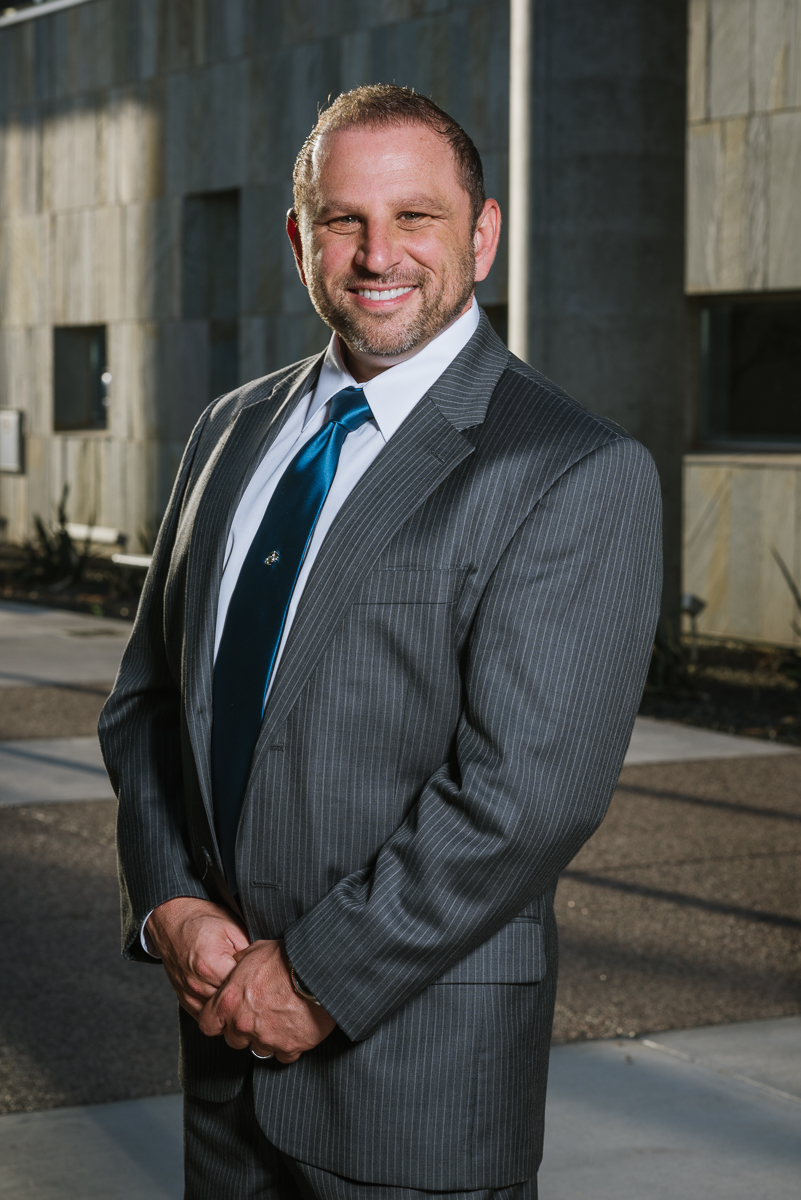 You
must take an active role in your defense. You are the person who
suffers any consequences from the charges. You lived through the events
in question and you know most of the facts much better than your
attorney. You should carefully review every piece of discovery and
assist your attorney to understand where alleged facts are wrong or need
more explanation. Be available and cooperative with your attorney.
Contribute to your defense by suggesting potential witnesses and
helping to brainstorm possible legal theories. Ask lots of questions to
become educated about the process so you can assist with the defense.
The lawyer and client each need to feel like they are top priority for
the other.
9. The Most Important Things on Your Case Occur Outside of Court
There is no doubt critical things occur in court. However, most of
the important work in defending a criminal case occurs between hearings.
Good criminal defense attorneys are good because they have a keen eye
for spotting legal issues, researching them carefully, conducting
interviews, writing good motions and knowing how and when to raise these
legal issues. Important legal issues have the possibility of excluding
critical evidence from the prosecutor’s case, and thereby possibly
making an otherwise extraordinarily difficult case more manageable or
even winnable. Negotiating favorable plea offers also occurs outside of
court, and often times with the assigned prosecutor’s supervisor, bureau
chief, or even division chief. You should be interested to know and
fully appraised of what is occurring outside of court between your
hearings.
10. Sometimes the Fight is Not about Guilt but rather about Punishment
There are criminal cases where the admissible evidence against the
defendant is overwhelming. Sometimes prosecutors have an admissible
confession, ample physical evidence, multiple unimpeachable witnesses,
and ample reliable scientific evidence to prove their case. However,
even with all this evidence of guilt, there is likely still a critical
and unresolved issue; the sentence. In Arizona, criminal defendants
have a right to a pre-sentence hearing. A pre-sentence hearing can be
like a mini-trial solely on the issue of proper punishment. This is a
valuable opportunity to present mitigating information, including in
court witnesses, who offer information which may have nothing to do with
the criminal case itself, but is calculated to educate the sentencing
judge about why a lesser sentence is justified. Preparation for the
pre-sentence hearing needs to begin early in the case as a hedge in case
sentencing is required. Various expert witnesses are often used at
this stage of the proceeding to help educate the judge about mitigating
facts. Obtaining a favorable sentence is a critical issue and is
sometimes the exclusive goal of the representation
By Marc J. Victor
March 24, 2016
10 Things to Know When Facing Criminal Charges
March 24, 2016
It may not be as bad as it initially seems. Prosecutors often
overcharge cases, and many cases get pled down to less serious charges.
Unjustified cases often get dismissed as well. This is an important
time to make good, clear-headed decisions rather than emotionally driven
ones. Take a deep breath, clear your head and resolve to make only
careful rationally based decisions.
2. Prepare for Your First Meeting with an Attorney
Gather all your paperwork and other important documents and items for
your attorney to review. You should also prepare a succinct version of
events to orally present to your attorney along with relevant witness
names and contact information. Inform your attorney about any evidence
which you believe needs to be preserved immediately.
Come with prepared questions to raise at the end in the event they
are not answered by the attorney. The first part of the meeting ought
to be the attorney carefully listening to you to gather relevant
information. After you have conveyed the relevant information to the
attorney, you should then receive a detailed analysis of potential legal
issues, an overview of how your case will progress and possible goals
of the representation. A comprehensive initial meeting with a criminal
defense attorney ought not to be a sales pitch but rather a meaningful
detailed and helpful meeting of at least an hour.
3. Select Your Attorney Carefully
Choosing the right criminal defense attorney will likely be your
first critical decision. All criminal defense attorneys know exactly
what you want to hear from them. Do not select a criminal defense
attorney who simply tells you what you want to hear. If your criminal
defense attorney is not bold enough to tell you the truth about your
case, this person is not tough enough to fight for you. Select a
criminal defense attorney who has decades of broad-based, hard-core,
committed and “in the trenches” criminal defense experience, but who is
still working aggressively to build a private practice. Criminal
defense attorneys at the end of their career may not be as interested in
good referrals from past clients as ones currently and aggressively
building and maintaining a good name. Meet in person with the criminal
defense attorney to evaluate whether the person is simply in it for a
fee or really cares about representing people against the state. If
their heart is not in your case, move on. Select your attorney as if
your very freedom depends on it.
4. Be Aware of Additional Charges, Priors, Allegations and Enhancements
The prosecutor has many options available for filing paperwork to
increase the risk of higher punishment upon any conviction. If you have
prior felony convictions, uncharged offenses or there is some fact
about your case which would make the conduct seem worse, be prepared for
a document from the prosecutor notifying you of the fact that the
prosecutor is intending to use this information to increase the
punishment upon any conviction. You should discuss this possibility
with your attorney at the initial meeting.
5. Your Charges May be Scratched, Vacated or Dismissed
There are many reasons why your charges could be simply dropped. It
is possible a prosecutor may determine you have not committed any crime.
However, more commonly, criminal charges are dropped because of a
variety of other reasons such as the arresting officer hasn’t completed a
report, the prosecutor has not yet reviewed the matter, lab reports or
important testing are not completed, full information about an alleged
victim’s injuries is not yet known, the matter is scheduled for a secret
Grand Jury presentation or a prosecutor simply wants more
investigation. Most felonies have a seven year statute of limitation
within which to bring criminal charges. Any time after charges are
dropped, but before charges are again re-filed, can be an excellent
opportunity to mitigate or even resolve your case. A skilled criminal
defense attorney will know how to attempt to maximize this opportunity
for you.
6. Think About Your Goals
Some criminal defendants have no goal other than to completely beat
the charges. Assuming this is a realistic possibility, this then is a
rational goal. However, if a Not Guilty verdict after trial is not a
likely outcome, you need to establish some reasonable goals with your
attorney. Goals such as avoiding any incarceration or avoiding a felony
conviction are common goals. Avoiding driver’s license suspensions,
protecting other professional licenses, or avoiding certain terms of
probation can be other legitimate goals in a criminal case.
7. Evaluate any Plea Offers Carefully
Despite the fact that most cases are resolved by plea bargain, you
are not legally entitled to a plea. Once rejected, you may never again
receive another plea offer. There are many people in prison right now
serving sentences much longer than the plea offers they foolishly or
ignorantly rejected before their trials. Accepting or rejecting a plea
offer is a critical decision that must be made with full information
after thorough and comprehensive discussion with a criminal defense
attorney who has aggressively worked the case. In order to properly
evaluate any plea offer, you must have good information about your
“real” chances at trial. The better your odds at trial, the better plea
offer you ought to receive. You must also have a good idea of the
likely sentence if you lose at trial. Nobody wants to accept a plea if
there is the possibility of a better plea in the future. Good criminal
defense attorneys will fight hard to get the “best” plea rather than
just any plea offer.
8. Be a Team Player
Youmust take an active role in your defense. You are the person who
suffers any consequences from the charges. You lived through the events
in question and you know most of the facts much better than your
attorney. You should carefully review every piece of discovery and
assist your attorney to understand where alleged facts are wrong or need
more explanation. Be available and cooperative with your attorney.
Contribute to your defense by suggesting potential witnesses and
helping to brainstorm possible legal theories. Ask lots of questions to
become educated about the process so you can assist with the defense.
The lawyer and client each need to feel like they are top priority for
the other.
9. The Most Important Things on Your Case Occur Outside of Court
There is no doubt critical things occur in court. However, most of
the important work in defending a criminal case occurs between hearings.
Good criminal defense attorneys are good because they have a keen eye
for spotting legal issues, researching them carefully, conducting
interviews, writing good motions and knowing how and when to raise these
legal issues. Important legal issues have the possibility of excluding
critical evidence from the prosecutor’s case, and thereby possibly
making an otherwise extraordinarily difficult case more manageable or
even winnable. Negotiating favorable plea offers also occurs outside of
court, and often times with the assigned prosecutor’s supervisor, bureau
chief, or even division chief. You should be interested to know and
fully appraised of what is occurring outside of court between your
hearings.
10. Sometimes the Fight is Not about Guilt but rather about Punishment
There are criminal cases where the admissible evidence against the
defendant is overwhelming. Sometimes prosecutors have an admissible
confession, ample physical evidence, multiple unimpeachable witnesses,
and ample reliable scientific evidence to prove their case. However,
even with all this evidence of guilt, there is likely still a critical
and unresolved issue; the sentence. In Arizona, criminal defendants
have a right to a pre-sentence hearing. A pre-sentence hearing can be
like a mini-trial solely on the issue of proper punishment. This is a
valuable opportunity to present mitigating information, including in
court witnesses, who offer information which may have nothing to do with
the criminal case itself, but is calculated to educate the sentencing
judge about why a lesser sentence is justified. Preparation for the
pre-sentence hearing needs to begin early in the case as a hedge in case
sentencing is required. Various expert witnesses are often used at
this stage of the proceeding to help educate the judge about mitigating
facts. Obtaining a favorable sentence is a critical issue and is
sometimes the exclusive goal of the representation
Wednesday, March 23, 2016
AMERICAN DIGEST: Comment on What Pisses Me Off About The Brussels Terrorist Attack
AMERICAN DIGEST: Comment on What Pisses Me Off About The Brussels Terrorist Attack: Never, and I will repeat, never can or will a government protect it's citizens from any danger or threat. That is the responsibility of the individual and his small, small group. Be vigilant and prepared at all times.
Monday, March 21, 2016
Sunday, March 20, 2016
Saturday, March 19, 2016
German Response to Negative Interest Rates - LewRockwell
German Response to Negative Interest Rates - LewRockwell
The Japanese response to negative interest rates was to buy personal safes. The German response is to pull money out of bank accounts and stick it in safe deposit boxes.
Both are perfectly understandable reactions to the prospect of having
to pay interest to a bank for holding deposits. It is particularly
interesting in Germany, where the Bundesbank a few years ago admitted
that the average real rate of return on savings deposits has been negative
for nearly the past 40 years. Now that nominal rates have turned
negative too, the facade of savings accounts as a safe place to park
money to earn a little bit of income has finally been ripped away.
The major risk, of course, is that because of the fractional-reserve
banking system, if enough depositors withdraw their funds the bank
collapses. If a bank maintains a reserve of 10% and depositors withdraw a
total of 10% of their deposits, the bank will have no money left to
satisfy withdrawals, pay checks drawn on the bank’s accounts, etc., and
will have to cease operating. In fact, even less than 10% of deposits
being withdrawn can start to lead to problems with payments. If that
were to happen the bank would have to start coming to the discount window
for help. If it had to rely on discount window lending enough times,
regulators might look to shut the bank down preemptively. If a big
enough bank goes down, or if enough banks find themselves in such a
situation, panic might set in and result in a bank run, with depositors
rushing to withdraw their money while they still can. Witness the situation in Cyprus a few years ago.
That is the risk that the move toward negative interest rate entails,
but one which no central bank is willing to admit. It must be sitting
at the back of policymakers’ minds, but they probably think that if they
don’t discuss the possibility of a total collapse of the banking system
then it won’t ever happen. We are in uncharted waters right now, with
central bankers who have failed over and over again yet who still
possess an unshakable confidence in their own knowledge, expertise, and
abilities, the “pretence of knowledge”
which Hayek so eloquently explained. A banking system collapse is
closer now than at any time previously, and probably closer than anyone
suspects, which is why negative interest rates are so dangerous. All it
takes is just one more rate cut, one more move into a further negative
territory to push enough people off the edge, to get them to withdraw
their deposits, which will result in a severe banking panic. Central
banks are playing with fire when they institute negative interest rates
and we’re all at risk of getting burned.
German Response to Negative Interest Rates: Safe Deposit Boxes
By Paul-Martin Foss
Carl Menger Center
Carl Menger Center
March 19, 2016
Both are perfectly understandable reactions to the prospect of having
to pay interest to a bank for holding deposits. It is particularly
interesting in Germany, where the Bundesbank a few years ago admitted
that the average real rate of return on savings deposits has been negative
for nearly the past 40 years. Now that nominal rates have turned
negative too, the facade of savings accounts as a safe place to park
money to earn a little bit of income has finally been ripped away.
The major risk, of course, is that because of the fractional-reserve
banking system, if enough depositors withdraw their funds the bank
collapses. If a bank maintains a reserve of 10% and depositors withdraw a
total of 10% of their deposits, the bank will have no money left to
satisfy withdrawals, pay checks drawn on the bank’s accounts, etc., and
will have to cease operating. In fact, even less than 10% of deposits
being withdrawn can start to lead to problems with payments. If that
were to happen the bank would have to start coming to the discount window
for help. If it had to rely on discount window lending enough times,
regulators might look to shut the bank down preemptively. If a big
enough bank goes down, or if enough banks find themselves in such a
situation, panic might set in and result in a bank run, with depositors
rushing to withdraw their money while they still can. Witness the situation in Cyprus a few years ago.
That is the risk that the move toward negative interest rate entails,
but one which no central bank is willing to admit. It must be sitting
at the back of policymakers’ minds, but they probably think that if they
don’t discuss the possibility of a total collapse of the banking system
then it won’t ever happen. We are in uncharted waters right now, with
central bankers who have failed over and over again yet who still
possess an unshakable confidence in their own knowledge, expertise, and
abilities, the “pretence of knowledge”
which Hayek so eloquently explained. A banking system collapse is
closer now than at any time previously, and probably closer than anyone
suspects, which is why negative interest rates are so dangerous. All it
takes is just one more rate cut, one more move into a further negative
territory to push enough people off the edge, to get them to withdraw
their deposits, which will result in a severe banking panic. Central
banks are playing with fire when they institute negative interest rates
and we’re all at risk of getting burned.
Thursday, March 17, 2016
Subscribe to:
Posts (Atom)

