Friday, September 30, 2016

The Top 40: Comment on Several major universities now offer segregated dorms for black students.

The Top 40: Comment on Several major universities now offer segregated dorms for black students.:


NOT YOURS TO GIVE

From The Life of Colonel David Crockett, compiled by Edward S. Ellis
(Philadelphia: Porter & Coates, 1884)

David Crockett
Member of Congress 1827-31, 1832-35


NOT YOURS TO GIVE
From The Life of Colonel David Crockett, compiled by Edward S. Ellis
(Philadelphia: Porter & Coates, 1884)
David Crockett
Member of Congress 1827-31, 1832-35
One day in the House of Representatives, a bill was taken up appropriating money for the benefit of a widow of a distinguished naval officer. Several beautiful speeches had been made in it's support. The Speaker was just about to put the question when Crockett arose:
"Mr. Speaker-- I have as much respect for the memory of the deceased, and as much sympathy for the suffering of the living, if suffering there be, as any man in this House, but we must not permit our respect for the dead or our sympathy for a part of the living to lead us into an act of injustice to the balance of the living. I will not go into an argument to prove that Congress has no power to appropriate this money as an act of charity. Every member upon this floor knows it. We have the right, as individuals, to give away as much of our own money as we please in charity; but as members of Congress we have no right so to appropriate a dollar of the public money. Some eloquent appeals have been made to us upon the ground that it is debt due the deceased. Mr. Speaker, the deceased lived long after the close of the war; he was in office to the day of his death, and I have never heard that the government was in arrears to him. Every man in this House knows it is not a debt. We cannot, without the grossest corruption, appropriate this money as the payment of a debt. We have not the semblence of authority to appropriate it as a charity. Mr. Speaker, I have said we have the right to give as much money of our own as we please. I am the poorest man on this floor. I cannot vote for this bill, but I will give one week's pay to the object, and if every member of Congress will do the same, it will amount to more than the bill asks."
He took his seat. Nobody replied. The bill was put upon its passage, and, instead of passing unanimously, as was generally supposed, and as, no doubt it would, but for that speech, it received but few votes, and, of course, was lost.
Later, when asked by a friend why he had opposed the appropriation, Crockett gave this explanation:

"Several years ago I was one evening standing on the steps of the Capitol with some other members of Congress, when our attention was attracted by a great light over in Georgetown. It was evidently a large fire. We jumped into a hack and drove over as fast as we could. In spite of all that could be done, many houses were burned and many families made homeless, and besides, some of them had lost all but the clothes they had on. The weather was very cold, and when I saw so many women and children suffering, I felt that something ought to be done for them. The next morning a bill was introduced appropriating $20,000 for their relief. We put aside all other business and rushed it through as soon as it could be done.
"The next summer, when it began to be time to think about the election, I concluded I would take a scout around among the boys of my district. I had no opposition there, but, as the election was some time off, I did not know what might turn up. When riding one day in a part of my district in which I was more of stranger than any other, I saw a man in a field plowing and coming toward the road. I gauged my gait so that we should meet as he came to the fence. As he came up, I spoke to the man. He replied politely, but, as I thought, rather coldly.
"I began: "Well, friend, I am one of those unfortunate beings called candidates, and----'

"Yes, I know you you are Colonel Crockett. I have seen you once before, and voted for you the last time you were elected. I suppose you are out electioneering now, but you had better not waste your time or mine. I shall not vote for you again.'
"This was a sockdolager....I begged him to tell me what was the matter.
"Well, Colonel, it is hardly worth-while to waste time or words upon it. I do not see how it can be mended, but you gave a vote last winter which shows that either you have not capacity to understand the Constitution, or that you are wanting in honesty and firmness to be guided by it. In either case you are not the man to represent me. But I beg your pardon for expressing it in that way. I did not intend to avail myself of the privilege of the constituent to speak plainly to a candidate for the purpose of insulting or wounding you. I intended by it only to say that your understanding of the Constitution is very different from mine; and I will say to you what, but for rudeness, I should not have said, that I believe you to be honest.... But an understanding of the Constitution different from mine I cannot overlook, because the Constitution, to be worth anything, must be held sacred, and rigidly observed in all its provisions. The man who wields power and misinterprets it is the more dangerous the more honest he is.'
"'I admit the truth of all you say, but there must be some mistake about it, For I do not remember that I gave any vote last winter upon any constitutional question.'
"'No, Colonel, there's no mistake. Though I live here in the back woods and seldom go from home, I take the papers from Washington and read very carefully all the proceedings in Congress. My papers say last winter you voted for a bill to appropriate $20,000 to some suffers by fire in Georgetown. Is that true?'
"'Well, my friend, I may as well own up. You have got me there. But certainly nobody will complain that a great and rich country like ours should give the insignificant sum of $20,000 to relieve it's suffering women and children, particularly with a full and overflowing Treasury, and I am sure, if you had been there, you would have done just as I did.'
"'It is not the amount, Colonel, that I complain of; it is the principle. In the first place, the government ought to have in the Treasury no more than enough for its legitimate purposes. But that has nothing to do with the question. The power of collecting and disbursing money at pleasure is the most dangerous power that can be intrusted to man, particularly under our system of collecting revenue by tariff, which reaches every man in the country, no matter how poor he may be, and the poorer he is the more he pays in proportion to his means. What is worse, it presses upon him without his knowledge where the weight centers, for there is not a man in the United States who can ever guess how much he pays to the government. So you see, that while you are contributing to relieve one, you are drawing it from thousands who are even worse off than he. If you had the right to give anything, the amount was simply a matter of discretion with you, and you had as much right to give $20,000,000 as $20,000. If you have the right to give to one, you have the right to give to all; and, as the Constitution neither defines charity nor stipulates the amount, you are at liberty to give to anything and everything which you may believe, or profess to believe, is a charity, and to any amount you may think proper. You will very easily perceive what a wide door this would open for fraud and corruption and favortism, on the one hand, and for robbing the people on the other. No, Colonel, Congress has no right to give charity. Individual members may give as much of their own money as they please, but they have no right to touch a dollar of the public money for that purpose.If twice as many houses had been burned in this county as in Georgetown, neither you nor any other member of Congress would have thought of appropriating a dollar for our relief.
There are about two hundred and forty members of Congress. If they had shown their sympathy for the suffers by contributing each one week's pay, it would have made over $13,000. There are plenty of men in and around Washington who could have given $20,000 without depriving themselves of even a luxury of life.. The congressmen chose to keep their own money, which, if reports be true, some of them spend not very creditable; and the people about Washington, no doubt, applauded you for relieving them from the necessity of giving by giving what was not yours to give. The people have delegated to Congress, by the Constitution, the power to do certain things. To do these, it is authorized to collect and pay moneys, and for nothing else. Everything beyond this is usurpation, and a violation of the Constitution.
"'So you see, Colonel, you have violated the Constitution in what I consider a vital point. It is a precedent fraught with danger to the country, for when Congress once begins to stretch it's power beyond the limits of the Constitution, there is no limit to it, and no security for the people. I have no doubt you acted honestly, but that does not make it any better, except as far as you are personally concerned, and you see that I cannot vote for you...'
"I tell you I felt streaked. I saw if I should have opposition, and this man should go talking, he would set others to talking, and in that district I was a gone fawn-skin. I could not answer him, for the fact is, I was so fully convinced that he was right, I did not want to. But I must satisfy him, and I said to him:
"Well, my friend, you hit the nail upon the head, when you said I had not sense enough to understand the Constitution. I intended to be guided by it, and thought I had studied it fully, I have heard many speeches in congress about the powers of the Congress, but what you have said here at your plow has got more hard, sound sense in it than all the fine speeches I ever heard. If I had ever taken the view of it that you have, I would have put my head into the fire before I would have given that vote; and if you will forgive me and vote for me again, if I ever vote for another unconstitutional law I wish I may be shot.'
"He laughingly replied: "Yes Colonel, you have sworn to that once before, but I will trust you again upon one condition. You say that you are convinced that your vote was wrong. Your acknowledgment of it will do more good than beating you for it. If, as you go around the district, you will tell people about this vote, and that you are satisfied it was wrong, I will not only vote for you, but will do what I can to keep down opposition, and perhaps, I may exert some little influence in that way.'
"'If I don't,' said I. "I wish I may be shot; and to convince you that I am in earnest in what I say I will come back this way in a week or ten days, and if you will get up a gathering of the people, I will make a speech to them. Get up a barbecue, and I will pay for it.'
"'No Colonel, we are not rich people in this section, but we have plenty of provisions to contribute for a barbecue, and some to spare for those who have none.. The push of crops will be over in a few days, and we can then afford a day for a barbecue. This is Thursday; I will see to getting up on Saturday week. Come to my house on Friday, and we will go together, and I promise you a very respectable crowd to see and hear you.'
"'Well, I will be here. But one thing more before I say good-by. I must know your name.'
"'My name is Bunce.'
"'Not Horatio Bunce?'
"'Yes.'
"'Well, Mr. Bunce, I never saw you before though you say you have seen me, but I know you very well. I am glad I have met you, and very proud that I may hope to have you for my friend.'
"It was one of the luckiest hits of my life that I met him. He mingled but little with the public, but was widely known for a heart brimful and running over with kindness and benevolence, which showed themselves not only in words but in acts. He was the oracle of the whole country around him, and his fame had extended far beyond the circle of his immediate acquaintance. Though I had never met him before, I had heard much of him, and but for this meeting it is very likely I should have had opposition, and had been beaten. One thing is very certain, no man could now stand up in that district under such a vote.
"At the appointed time I was at his house, having told our conversation to every crowd I had met, and to every man I stayed all night with, and I found that it gave the people an interest and a confidence in me stronger than I had ever seen manifested before.
"Though I was considerably fatigued when I reached his house, and, under ordinary circumstances, should have gone early to bed, I kept up until midnight, talking about the principles and affairs of government and got more real, true knowledge of them than I had got all my life before.
"I have known and seen much of him since, for I respect him --- no, that is not the word -- I reverence and love him more than any living man, and I go to see him two or three times a year; and I will tell you sir, if everyone who professes to be a Christian, lived and acted and enjoyed it as he does, the religion of Christ would take the world by storm.
"But to return to my story. The next morning we went to the barbecue, and, to my surprise, found about a thousand men there. I met a good many whom I had not known before, and they and my friend introduced me around until I had got pretty well acquainted---at least, they all knew me.
"In due time notice was given that I would speak to them. They gathered up around a stand that had been erected. I opened my speech by saying: "Fellow-citizens --- I present myself before you today feeling like a new man. My eyes have lately been opened to truths which ignorance or prejudice, or both, had heretofore hidden from my view. I feel that I can today offer you the ability to render you more valuable service than I have ever been able to render before. I am here today more for the purpose of acknowledging my error than to seek your votes. That I should make this acknowledgement is due to myself as well as to you. Whether you will vote for me is a matter for your consideration only.'
"I went on to tell them about the fire and my vote for the appropriation and then told them why I was satisfied it was wrong. I closed by saying:
"And now, fellow-citizens, it remains only for me to tell you that the most of the speech you have listened to with so much interest was simply a repetition of the arguments by which your neighbor, Mr. Bunce, convinced me of my error.
"'It is the best speech I ever made in my life, but he is entitled to the credit for it. And now I hope he is satisfied with his convert and that he will get up here and tell you so.'
"He came upon the stand and said:
"'Fellow-citizens --- It affords me great pleasure to comply with the request of Colonel Crockett. I have always considered him a thoroughly honest man, and I am satisfied that he will faithfully perform all that he has promised you today.'
"He went down, and there went up from that crowd such a shout for Davy Crockett as his name never called forth before.
"I am not much given to tears, but I was taken with a choking then and felt some big drops rolling down my cheeks. And I tell you now that the remembrance of those few words spoken by such a man, and the honest, hearty shout they produced, is worth more to me than all the reputation I have ever made, or shall ever make, as a member of Congress.
"Now, sir," concluded Crockett, "you know why I made that speech yesterday.
"There is one thing now to which I will call your attention. You remember that I proposed to give a week's pay. There are in that House many very wealthy men-- men who think nothing of spending a week's pay, or a dozen of them, for a dinner or a wine party when they have something to accomplish by it. Some of those same men made beautiful speeches upon the great debt of gratitude which the country owed the deceased -- a debt which could not be paid by money --- and the insignificant and worthlessness of money, particularly so insignificant a sum as $10,000, when weighed against the honor of the nation. Yet not one of them responded to my proposition. Money with them is nothing but trash when it is to come out of the people. But it is the one great thing for which most of them are striving, and many of them sacrifice honor, integrity, and justice to obtain it."

Singing on a Bus � The Thinking Housewife

Singing on a Bus � The Thinking Housewife

Secret Alpine Gold Vaults Are the New Swiss Bank Accounts - Bloomberg

Secret Alpine Gold Vaults Are the New Swiss Bank Accounts - Bloomberg

Tuesday, September 20, 2016

OPEC ‘very close’ to agreement to stabilize market, Venezuelan president says

OPEC ‘very close’ to agreement to stabilize market, Venezuelan president says


OPEC ‘very close’ to agreement to stabilize market, Venezuelan president says

By NORIS SOTO, ANDREW ROSATI on 9/19/2016
PORLAMAR, Venezuela (Bloomberg) -- OPEC members are close to reaching an agreement on how to stabilize the market, Venezuelan President Nicolas Maduro said after speaking to his counterparts from Iran and Ecuador.
Maduro held “positive discussions” with fellow members of the Organization of Petroleum Exporting Countries who attended the Summit of the Non-Aligned Movement, he said Sunday at a press conference following the event, in which 15 heads of state gathered in the South American country. Maduro said he spoke with Ecuadorian President Rafael Correa and Iranian President Hassan Rouhani at the summit and that he hopes an accord can be reached by the end of the month.
“We are close to an agreement between OPEC and non-OPEC countries to stabilize themarket,” state oil company Petroleos de Venezuela SA wrote on Twitter, citing Maduro. A “definitive answer” for market stability could come this month, he said, according to PDVSA.
Ministers from all 14 member nations of OPEC, as well as the energy minister of Russia plan to have informal discussions about the oil market in Algiers on Sept. 27 on the sidelines of the International Energy Forum.
News of the meeting has fanned speculation that producers may agree on an output cap to shore up prices that are languishing below $50/bbl nearly two years into the largest marketcrash in a generation. If the ministers reach a consensus in Algeria, OPEC may call a special meeting, Secretary General Mohammed Barkindo said on Sunday, according to Algeria’s official news agency.
Brent crude, the global benchmark, was up 1.8% at $46.57/bbl as of 11:22 a.m. Singapore time.

Oil seen recovering but glut will persist into 2017

Oil seen recovering but glut will persist into 2017: Oil seen recovering but glut will persist into 2017


Oil seen recovering but glut will persist into 2017

9/19/2016
LONDON -- McKinsey Energy Insights (MEI), a data and analytics specialist, forecasts that it will take more than six months for the oil markets to fully rebalance.
In its latest research, MEI suggests that the pace and timing of an oil price recovery depends on four key drivers in the short-term: GDP growth, decline in producing fields, slowdown in U.S. light tight oil (LTO) production and OPEC Gulf state behavior, in particular, Iran and Saudi Arabia.
MEI modeled four scenarios—fast recovery, slow recovery, under-investment and supply abundance—and the latest trends point towards a slow market recovery scenario. In this case, the market will take another six months for oversupply to disappear and another 6-12 months to burn excess inventories. In the long term, continuous cost compression efforts could reduce average marginal costs to $65-75/bbl, driven by deepwater and LTO plays.
James Eddy, head of MEI, said, “The market is recovering, but this may be slower than previously expected. We expect demand growth to decelerate as a result of slowing economic development and structural shifts in the transport sector.
“On the supply side, in addition to OPEC Gulf crude production, we see unconventionals and offshore resources playing an important role in replacing the 34 MMbpd decline in conventional basins through 2030.”
The research also notes that there is a key short-term risk that OPEC Gulf members have the capacity to add more than 3-4 MMbpd incremental production by 2019. This could potentially stifle oil prices further into 2018-19.

Stacked oil and gas make Permian deals costly in spite of rout

Stacked oil and gas make Permian deals costly in spite of rout


Stacked oil and gas make Permian deals costly in spite of rout

By MATTHEW MONKS on 9/19/2016
NEW YORK (Bloomberg) -- Oil prices are depressed, but Texas shale has never been more valuable.
A recent spate of land deals in the sprawling Permian basin illustrates a counter-intuitive trend: Real estate in the country’s most active oil field is even more expensive today than it was before commodity prices crashed.
QEP Resources Inc. agreed to pay a price that works out to close to $60,000 per net acre in June for a slice of the Permian, in the basin’s priciest land deal on record.
That’s more than double the average $30,000 per net acre explorers paid for Permian land during the first nine months of 2014, when oil topped $100/bbl, according to data from Citigroup Inc. Oil has been hovering at $45 to $50/bbl since mid-August.
Over the past few months, at least four other explorers agreed to pay more than $30,000 per net acre to expand in the Permian: Concho Resources Inc., Parsley Energy Inc., SM Energy Co., and Silver Run Acquisition Corp., according to data compiled by Bloomberg.
“The valuations are pretty lofty,” said Bryan Lastrapes, managing director at Moelis & Co. “When you look at the prices being paid for a flowing barrel, they are higher than when oil was at $100.”
Unusual geography
The obvious question: With oil so much cheaper today, why has Permian land become so pricey? There are a few explanations. The first comes down to the same reason a dingy is more valuable on a sinking ship.
“It’s about scarcity,” said Bruce Cox, global head of energy acquisitions and divestitures with Credit Suisse Group AG.
The Permian is one of the few places in the U.S. where drilling remains profitable amid low prices, thanks to its unusual geography, in which different layers of oil- and gas-soaked rock are stacked like layers in a cake, he said. An explorer can drill multiple horizontal wells after digging straight down.
“What you can’t find in most plays is the Permian hydrocarbon column,” Cox said. “Companies can drill two to four times as many wells over a 10-year development period” in the Permian than in other basins.
QEP rationale
This is a key part of the rationale QEP used to justify the price it agreed to pay for the 9,400 net acres in the Permian in June.
The company told investors it sees a chance to drill more than 400 horizontal wells along four different benches of shale, more than a half-mile down, where it has already determined there is oil. It sees additional upside potential drilling riskier, wildcat wells on three other benches. So it isn’t buying just one field, but as many as seven.
That deal also addresses a perpetual critique from investors that QEP isn’t big enough in the Permian, by increasing its position there by 50%, Richard Doleshek, QEP’s CFO, said in August.
“From a dollar-per-acre standpoint, we heard a lot of conversation about how that was a big number,” Doleshek said during a presentation at an oil and gas conference sponsored by Enercom Inc., according to a transcript compiled by Bloomberg.
“When you look at it on a target basis, it’s relatively reasonable,” he said. “It’s pristine acreage.”
Lower costs
Another factor driving up Permian land prices is the fact that it has some of the lowest break-even costs in the world. The area has more than a half-dozen fields where drilling can stay profitable even when oil falls below $30/bbl, according to data compiled by Bloomberg.
The oil rout has set off a land grab for that reason, said Ron Gajdica, co-head of energy acquisitions and divestitures with Citigroup.
“When oil prices were high, there was a high supply of acreage with economic drilling opportunities,” he said. “Now, in a $40 to $50 oil price environment, acreage with economic locations is scarcer. There are only a limited amount of opportunities and many of them are in the Permian.”
A couple of other things are driving up the price of Permian land. First, development costs have come down sharply during the downturn, thanks to lower service costs, technological advances and more efficient techniques, Gajdica said. That means explorers can justify paying higher prices for land.
Second, Wall Street is helping the trend. Publicly traded Permian explorers such as Concho and Parsley trade at a premium to other shale players. They paid for their recent acquisitions with stock. Since their currency is worth more, they can afford to pay up.
In addition, other explorers with operations elsewhere, such as QEP and SM, saw their share prices spike after striking deals in the Permian, which could spur even more deal-making in the area.
“The market tends to respond favorably when these Permian deals are announced,” Gajdica said.

Sunday, September 18, 2016

Joke Humor

Curmudgeonly & Skeptical presents Boned Jello: A man walked into a bar with his alligator and asked the bartender, "Do you serve lawyers here?"

"Sure do," replied the bartender.

"Good," said the man. "Give me a beer, and I'll have a lawyer for my gator."


# posted by Anonymous jlw : 9/14/16, 1:16 PM
~

#####
Don't go into there without a duck.
He went in anyway and hit his head on the low bar.
# posted by Blogger toadold : 9/14/16, 2:06 PM
~

#####
DeLorean driver clocked by police at 88mph insists 'I wasn't trying to time travel'. Oh yes.
# posted by Anonymous Helly : 9/14/16, 2:58 PM
~

#####
A termite walked into a bar and asked 'Is the bar tender here?'
Tim
# posted by Anonymous Anonymous : 9/14/16, 3:03 PM
~

#####
Helly- "Great Scot!"

Knock, Knock
Who's there?
A Time Traveler
A Time Traveler who?
Knock, Knock

What do we want?
Time travel
When do we want it?
That's irrelevant!

Luigi
# posted by Anonymous Anonymous : 9/14/16, 5:34 PM
~

#####
A woman walks into a bar carrying a duck. The bartender says "That is one ugly pig you got there." The lady says "That's not a pig - its a duck." Then the bartender says "I know, I was talking to the duck."
# posted by Anonymous Anonymous : 9/14/16, 7:45 PM
~

 #####
Hellen Keller walks into a bar.

... and a table,

... and a stool,

...
# posted by Blogger Ralph Gizzip : 9/14/16, 9:09 PM
~

#####
Have you ever smoked a Cuban?
Sure. Back in '76, in Angola, we smoked a bunch of 'em!

Caballero Andante
# posted by Anonymous Anonymous : 9/14/16, 11:39 PM
~
#


#### 
How do you stop a Polish army on horseback?
Turn off the carousel.

Curmudgeonly & Skeptical presents Boned Jello

Curmudgeonly & Skeptical presents Boned Jello:

joke humor


Why can't you trust an atom?
Because they make up everything


.

A drunk walks into a bar with jumper cables around his neck. The bartender says, "You can stay but don't try to start anything."


 "Give it to me! Give it to me!" she yelled, "I'm so wet, give it to me now!" She could scream all she wanted to. I was keeping the umbrella.


My dick was in the Guinness Book of World Records.
Until the librarian had me thrown out.


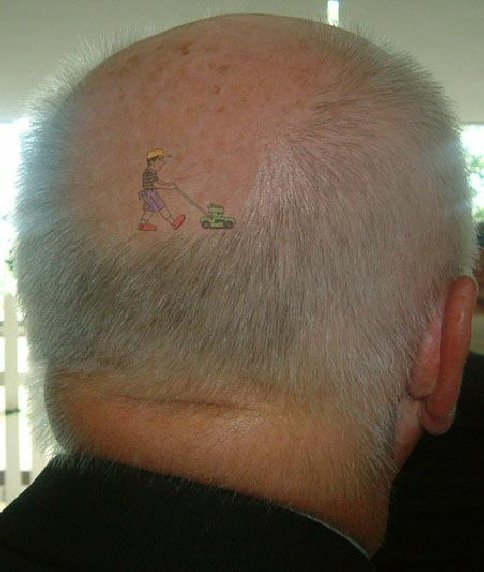
If You're Looking For A Tattoo But Don't Want Anything Major, Try These 15 - Dose - Stories Worth Sharing

If You're Looking For A Tattoo But Don't Want Anything Major, Try These 15 - Dose - Stories Worth Sharing

21 Daring Feats No One In Their Right Mind Would Dare Try - Dose - Stories Worth Sharing

21 Daring Feats No One In Their Right Mind Would Dare Try - Dose - Stories Worth Sharing

If Trumps Wins, Hillary and Bill Clinton Go To Jail! - YouTube

If Trumps Wins, Hillary and Bill Clinton Go To Jail! - YouTube

If Trumps Wins, Hillary and Bill Clinton Go To Jail! - YouTube

If Trumps Wins, Hillary and Bill Clinton Go To Jail! - YouTube

Stories | Atlas Obscura

Stories | Atlas Obscura

Saturday, September 10, 2016

The Many Health Benefits of Sauna Bathing

The Many Health Benefits of Sauna Bathing

Superstar Seniors Exercise Well Into Their Golden Years

Superstar Seniors Exercise Well Into Their Golden Years

Paradise Lost - Taki's Magazine

Paradise Lost - Taki's Magazine


The Bible tells us that our allotted span is threescore years and
ten. Advances in medicine and public health—sanitation, for example—have
made nonsense of this in the developed countries of the West where life
expectancy is being pushed well up into the 80s, at least among the
affluent. Nevertheless, there comes to each of us the day when we become
aware that the grave is yawning or the crematorium doors are being held
open. Benjamin Franklin famously declared that “in this world nothing
can be said to be certain, except death and taxes,” and though Apple,
Google, and many multinational corporations have made nonsense of that
second certainty, the first remains inescapable. Someday the worms or
the flames will have our body, and as you advance through your eighth
decade, you can’t avoid the awareness that that day may be any day now.
William Wordsworth wrote a great poem entitled “Intimations of
Immortality from Recollections of Early Childhood,” but it’s intimations
of mortality that any stabbing chest pain or mysterious lump, or simply
feeling bloody awful a lot of the time, is more likely to provoke. “Old
age,” Charles de Gaulle wrote, “is a shipwreck,” or, as the author of
the Book of Ecclesiastes has it, the day comes “when the grasshopper
shall be a burden, and desire shall fail.” Too bad, in other words.


Mortality? Immortality? The question hangs over us all. It did so
even in the centuries when religious faith went largely unquestioned. As
Andrew Marvell, 17th-century poet, reminded his “coy mistress”—his
playing-hard-to-get girl, we might say now: “The grave’s a fine and
private place/But none, I think, do there embrace.” Too true they don’t.
Nevertheless, Marvell, like almost everybody of his time, surely
believed in the immortality of the soul, life after death, even
(probably) the resurrection of the body. Read the bloody annals of
history, and time and again you find men and women going to death on the
scaffold confident that this wasn’t the end. The Scots royalist
general, the Marquess of Montrose, in lines written the night before his
execution in 1650, anticipated that his body would be dismembered and
his ashes scattered, yet declared, “Lord! since thou know’st where all
these atoms are, I’m hopeful Thou’lt recover once my dust, And confident
Thou’lt raise me with the just.” A hundred years later one of the more
notorious scoundrels in Scottish history, the octogenarian Simon Fraser,
Lord Lovat, went serenely to have his head cut off on Tower Hill,
declaring that he expected to be in paradise by noon—though there were
some who thought that as a convicted traitor and unconvicted rapist,
Lovat was more likely to find himself in the other place.

“Mortality? Immortality? The question hangs over us all.”
That was then. What about now? Some seventy years ago George Orwell
wrote that the decline of belief in personal immortality was one of the
most remarkable features of the 20th century. Clearly, as he admitted,
the belief in life after death hadn’t quite disappeared. But the
certainty had diminished. People might still recite the Apostles’ Creed
with its affirmation of belief in “the Resurrection of the Body and the
Life Everlasting,” but did they believe as their forefathers had? Even
bishops of the Church of England might, if pressed on the question,
express no more than a belief in the survival of a sort of something
after death.


You may think Orwell exaggerated. He probably did exaggerate. We all,
surely, know people who believe with what appears to be absolute
confidence in the immortality of the soul and the life everlasting.
Moreover, even the most skeptical, attending a funeral service and
listening to the words of the Bible or prayer book, are likely to be
moved and, for a moment at least, to question their own skepticism,
doubt their unbelief. Nevertheless, Orwell was right, at least to this
extent: that the 20th century was the first in the Christian era in
which agnosticism was common and atheism generally acceptable. The trend
has accelerated since he wrote about it. Church attendance has
continued to fall. The number of people who describe themselves as being
of no faith has continued to rise. Belief in the immortality of the
soul—let alone the resurrection of the body—continues to dwindle, and I
find it hard to believe that many now agree with Peter Pan, who declared
that “to die will be an awfully big adventure.”


This skepticism hasn’t invaded other religions, or at least not
Islam. The readiness of Islamist suicide bombers to go happily, or at
least willingly, to their death attests to their belief in an afterlife.
Some may even eagerly look forward to the 76 virgins reputedly promised
them in their Muslim paradise, no matter how unlikely it is that there
can be quite so many dead virgins waiting there to welcome them. For
many in the West, however, it is precisely this sort of belief that
leads them to regard Islam as a backward religion.


Few of us, I would surmise, now imagine a future life in the
old-fashioned sort of paradise with angels strumming harps and all that,
even if we imagine any sort of life after death. Yet even if we retain
some vestige of belief in a sort of heaven, we seem to have abandoned
the idea of hell. There are doubtless still hellfire preachers who
conjure up its horrors to thrill their congregation, but they are on the
fringes. The established churches seem to have sidelined hell. This is
curious if only because hell was, for most of the Christian era,
imagined more vividly and precisely than heaven. Read Dante’s Inferno
or look at the paintings of Hieronymus Bosch, and you find a detailed
representation of everlasting torment. For hundreds of years, as George
Steiner wrote, “the imagination dwelt on the flaying, the racking, the
mockery of the damned, in a place of whips and hell-hounds, of ovens and
stinking air.” Devout Christians like Dr. Johnson were awestruck and
terrified by the images and idea of hell. We may now mostly have thrust
the idea of hell aside, though, as Steiner remarked, it was only when we
no longer believed in hell after death that it was translated by the
Nazis into the hell on earth of the death camps. Indeed hell on earth,
hell in life, is an undeniable reality. Look at Syria today. Look at the
devilish practices of ISIS.


For most of us in the West such horrors are, happily, confined to our
television screens. They are things that happen, repulsively,
appallingly, to other people. The prospect of our own death is
different, and that prospect eventually becomes inescapable, either on
account of some terminal illness or simply because of age. For decades
you may never think of it, but unless you are suddenly carried off
without warning, the day comes when you hear death shuffling up on you,
when, if you don’t believe in an afterlife, you sense that the curtain
is going to come down.


It’s
reading once again the last diary of my old friend, the playwright
Simon Gray, that has got me brooding on death. This volume, Coda,
is a record of his thoughts, feelings, and experiences after being
diagnosed with lung cancer and confronted with the reality of imminent
death. It’s brave, melancholy, and witty—he was one of the sharpest and
funniest men I have known. At one time he contemplates the question of
suicide, as many must do in such circumstances. “I can always kill
myself as soon as I find that living is an agony, but how? is the
question…how exactly does one kill oneself in a fashion that causes the
least distress to those one loves—and the least inconvenience to many
people that one doesn’t love, but has no right to inconvenience?” These
are questions to which there is no satisfactory answer, and I suppose
that people commit suicide only when they have reached a stage at which
they no longer care what the answer might be. Ending the self is
unavoidably a selfish act, and I suppose that if you don’t believe in
God and divine punishment and all that, it’s imagining the distress and
inconvenience you cause that serves as the principal deterrent. Simon
didn’t kill himself. He argued himself out of the temptation, and indeed
Coda ends happily, optimistically, with the cancer in
remission and the doctors promising him two years more of life. I had a
cheerful email from him giving me the news and then, characteristically,
grumbling that he must now find a subject for a play to write. He never
did. The next news I had was of his death—sudden, from a heart attack,
not his cancer. That’s death’s way. Cheated in some fashion, it will
nevertheless creep up on you.


Nowadays, of course, we’re in a real fix about death. No longer
believing in the life everlasting, medical science, doctors, nurses,
etc. combine and contrive to make this one last as long as possible,
dragging out existence even when the patient has been reduced to a
vegetable condition. I know nobody who doesn’t shrink from that
prospect, and yet it confronts millions of us. “Why prolong life, save
to prolong pleasure?” asked that tough old pagan Norman Douglas. A good
question, and he answered it himself by taking an overdose when the
prospect of pleasure seemed to have vanished. Unless you believe, like
Hamlet, that “the Almighty has set his canon ’gainst self-slaughter,” it
seems a good way out, preferable to dragging out existence, mindless
and incontinent, in a geriatric ward. Still, no matter how the end
comes, the bell tolls for us all.

Charles Ortel

Charles Ortel


Clinton foundation audit

Monday, September 05, 2016

A Voice From Syria | Gates of Vienna

A Voice From Syria | Gates of Vienna


Of all the intelligent and exciting speeches at the American Freedom
Alliance event in Los Angeles, August 21st 2016, probably the most
touching was given by Wafa Sultan, the author of A God Who Hates.
Herself originally from Syria, Sultan’s attacks on Islam have been so
direct and uncompromising that even the toughest American or European
Islam-critic pales in comparison with her. She started out by setting a
few things straight:


In brief, Islam is not a religion. It is a political ideology
that imposes itself by force and fear. American values, such as
compassion, respect and acceptance of others, should not get in the way
of understanding the danger that threatens those very core virtues.
Following these values blindly might lead to demise.


There
you have it: Islam is not a religion, and categorising it as such is a
mistake. Wafa did not even leave open the option that some purely
religious form of Islam may exist somewhere — she suggests that we cease
to even consider the idea that Islam should be considered a religion.

Saturday, September 03, 2016

Symptoms and causes - Addison's disease - Mayo Clinic

Symptoms and causes - Addison's disease - Mayo Clinic

Fludrocortisone Dosage Guide with Precautions - Drugs.com

Fludrocortisone Dosage Guide with Precautions - Drugs.com:


Addison's Disease

Fludrocortisone Dosage Guide with Precautions - Drugs.com

Fludrocortisone Dosage Guide with Precautions - Drugs.com:


Addison's Disease

Defend Your Person, Your Property, and Your Liberty - LewRockwell

Defend Your Person, Your Property, and Your Liberty - LewRockwell:


The Law


The Law: Should be Required Reading in Washington, D.C.


Email
Print
FacebookTwitterShare


What book is important enough that I read it once a year? The Law
by Frederic Bastiat. Written in 1848 as a response to socialism in
France, this book essay is just as relevant today as it was then.


“What, then, is law? It is the collective organisation of the individual right to lawful defence.


Each of us has a natural right from God to defend his person, his
liberty, and his property. These are the three basic requirements of
life, and the preservation of any one of them is completely dependent
upon the preservation of the other two. For what are our faculties but
the extension of our individuality? And what is property but an
extension of our faculties?


If every person has the right to defend – even by force – his person,
his liberty, and his property, then it follows that a group of men have
the right to organise and support a common force to protect these
rights constantly. Thus the principle of collective right – its reason
for existing, its lawfulness – is based on individual right. And the
common force that protects this collective right cannot logically have
any other purpose or any other mission than that for which it acts as a
substitute. Thus, since an individual cannot lawfully use force against
the person, liberty, or property of another individual, then the common
force – for the same reason – cannot lawfully be used to destroy the
person, liberty, or property of individuals or groups.


Such a perversion of force would be, in both cases, contrary to our
premise. Force has been given to us to defend our own individual rights.
Who will dare to say that force has been given to us to destroy the
equal rights of our brothers? Since no individual acting separately can
lawfully use force to destroy the rights of others, does it not
logically follow that the same principle also applies to the common
force that is nothing more than the organised combination of the
individual forces?


Why are the most advertised Gold and Silver coins NOT the best way to invest?


If this is true, then nothing can be more evident than this: The law
is the organisation of the natural right of lawful defence. It is the
substitution of a common force for individual forces. And this common
force is to do only what the individual forces have a natural and lawful
right to do: to protect persons, liberties, and properties; to maintain
the right of each, and to cause justice to reign over us all.”


My copy of The Law is filled with highlighted yellow phrases. Among them:


“But, unfortunately, law by no means confines itself to its proper
functions. And when it has exceeded its proper functions, it has not
done so merely in some inconsequential and debatable matters. The law
has gone further than this; it has acted in direct opposition to its own
purpose. The law has been used to destroy its own objective: It has
been applied to annihilating the justice that it was supposed to
maintain; to limiting and destroying rights which its real purpose was
to respect. The law has placed the collective force at the disposal of
the unscrupulous who wish, without risk, to exploit the person, liberty,
and property of others. It has converted plunder into a right, in order
to protect plunder. And it has converted lawful defence into a crime,
in order to punish lawful defence.


How has this perversion of the law been accomplished? And what have been the results?


The law has been perverted by the influence of two entirely different
causes: stupid greed and false philanthropy. Let us speak of the first.


Every legislator should be forced to read Bastiat’s The Law once a
month for their entire term and write a synopsis of how they have upheld
the ideas contained within it. The tome should be taught in our school
systems. It should be drilled into every citizen’s head from birth until
death.”


When he was alive, Bastiat called the United States the one nation in
the world that came close to applying the law in a just manner. If he
could visit us today, he would puke all over the steps of Congress. He
would barf in the halls of the White House. He would upchuck in
lobbyists offices all over Washington, D.C. When he was done throwing
up, I do believe Bastiat would start a revolution.


He would definitely take on our current system of governance because
we’re turning into Socialism Lite ‘Less Filling, More Taxes.’


“Socialists look upon people as raw material to be formed into social
combinations. This is so true that, if by chance, the socialists have
any doubts about the success of these combinations, they will demand
that a small portion of mankind be set aside to experiment upon. The
popular idea of trying all systems is well known. And one socialist
leader has been known seriously to demand that the Constituent Assembly
give him a small district with all its inhabitants, to try his
experiments upon.


In the same manner, an inventor makes a model before he constructs
the full-sized machine; the chemist wastes some chemicals – the farmer
wastes some seeds and land – to try out an idea.


But what a difference there is between the gardener and his trees,
between the inventor and his machine, between the chemist and his
elements, between the farmer and his seeds! And in all sincerity, the
socialist thinks that there is the same difference between him and
mankind!


It is no wonder that the writers of the nineteenth century look upon
society as an artificial creation of the legislator’s genius. This idea –
the fruit of classical education – has taken possession of all the
intellectuals and famous writers of our country. To these intellectuals
and writers, the relationship between persons and the legislator appears
to be the same as the relationship between the clay and the potter.


Moreover, even where they have consented to recognise a principle of
action in the heart of man – and a principle of discernment in man’s
intellect – they have considered these gifts from God to be fatal gifts.
They have thought that persons, under the impulse of these two gifts,
would fatally tend to ruin themselves. They assume that if the
legislators left persons free to follow their own inclinations, they
would arrive at atheism instead of religion, ignorance instead of
knowledge, poverty instead of production and exchange.”


Read The Law.
It will change all your assumptions about what the role of government
should be in your life in only 76 pages. When you’re done, make your
friends read The Law. If they won’t, stop being friends with them. Send a
copy to your Representatives and Congressmen and ask them what the hell
they think they’re doing with this country of ours.


Reprinted from Amazon.com.

Thursday, September 01, 2016

Kapernick

The Top 40: Comment on The National Football League is on TV. It can easily be turned off.: Never in my life have I thought about America’s faults while standing, and singing, the national anthem. I may think many things, including what a great country it is, how proud and fortunate I am to live here, etc. but pondering its faults, nope. There’s plenty of time and other places for that. I kind’a feel sorry for you if you feel the need to do that then.

Higher Education and the Holy Cookie @ AMERICAN DIGEST

Higher Education and the Holy Cookie @ AMERICAN DIGEST


BEHOLD I BRING YOU TIDINGS OF GREAT JOY

MOM'S (Lois Lucille McNair Van der Leun's ) CLASSIC OATMEAL CHOCOLATE CHIP COOKIES


Please note: It is not to be made merely by combing the ingredients but by following the procedure, the sacred ritual.


Combine: 3/4 Cup brown sugar with 3/4 Cup white sugar.

Mix in until smooth but gritty 1 cup shortening ( Crisco [classic] or
butter/marge + Crisco in varying proportions )* This, and other mixing
moments, can be done with your hands if a) you have washed them, and b)
nobody's around to see you do it. Maintain plausible deniability.


Add 2 eggs -- Beaten-- plus 1 teaspoon vanilla.


Combine One and 1/2 Cups flour with 1 teaspoon salt and 1 teaspoon
soda and then work into sugar, shortening and egg mixture until smooth.


Add two cups of rolled oats and work into the dough. Add one 12 oz
package semi-sweet chocolate chips (No more. Resist temptation.) and
(optional) 1 cup chopped black walnuts**. Shape into medium-sized (no
more than 3" in diameter, baked) cookies and bake on a greased cookie sheet


Bake in a 350 oven for 10-12 minutes or until golden brown. Monitor at around 8 minutes.


The recipe is usually good for 2-3 standard size cookie sheets. When
baking, it is best to start one tray in the lower rack of the oven and
after eight minutes move it to the upper.


Allow to cool. You will snake three to five and burn your lip on the
first bite, but try to show a little restraint after this, okay?


Yield: 4-5 Dozen


Note: The Holy Cookie, when baked to perfection, should not be chewy
or soft but possess, upon being cooled, a toothsome quality and a
certain proportion of crisp-walled open cells throughout the cookie that
absorb milk when dunked, but do not become a milk sodden mush. The milk
should be present within the cells of the cookie, but the cookie
itself, providing one has not be lazy and let it just slosh around in
the glass, should still retain a certain crispness and emit a distinct
crunch when consumed.


* Yes, Crisco. This ancient pure product of Amerca can still be found
in the baking aisle. The Holy Cookies cannot achieve their proper milk
absorbing properties without its presence. If you have some sort of
issue with Crisco, get over it and just cowboy up. While butter or
margarine can be used in combination with Crisco, their proportions are
problematical. One stick is probably the maximum.


** Black Walnuts are optional but not, strictly speaking, classic.
Still, they add an extra texture which is appealing, unless, of course,
you are allergic to walnuts in which case you eat them and you die --
happy and with an enhanced skill set.

CornellNotesGraph.pdf

CornellNotesGraph.pdf

Thursday, August 04, 2016

Tuesday Tax Tidbit: Should You Make a "Charitable IRA Rollover" in 2016? | Weaver | Assurance - Tax - Advisory

Tuesday Tax Tidbit: Should You Make a "Charitable IRA Rollover" in 2016? | Weaver | Assurance - Tax - Advisory: Should You Make a "Charitable IRA Rollover" in 2016?


Last year a break valued by many charitably inclined retirees was
made permanent: the charitable IRA rollover. If you’re age 70½ or older,
you can make direct contributions — up to $100,000 annually — from your
IRA to qualified charitable organizations without owing any income tax
on the distributions.


Satisfy your RMD


A charitable IRA rollover can be used to satisfy required minimum
distributions (RMDs). You must begin to take annual RMDs from your
traditional IRAs in the year in which you reach age 70½. If you don’t
comply, you can owe a penalty equal to 50% of the amount you should have
withdrawn but didn’t. (An RMD deferral is allowed for the initial year,
but you’ll have to take two RMDs the next year.)


So if you don’t need the RMD for your living expenses, a charitable
IRA rollover can be a great way to comply with the RMD requirement
without triggering the tax liability that would occur if the RMD were
paid out to you.


Additional benefits


You might be able to achieve a similar tax result from taking the RMD
payout and then contributing that amount to charity. But it’s more
complex because you must report the RMD as income and then take an
itemized deduction for the donation. This has two more possible
downsides:


  • The reported RMD income might increase your income to the point that
    you’re pushed into a higher tax bracket, certain additional taxes are
    triggered and/or the benefits of certain tax breaks are reduced or
    eliminated. It could even cause Social Security payments to become
    taxable or increase income-based Medicare premiums and prescription drug
    charges.
  • If your donation would equal a large portion of your income for the
    year, your deduction might be reduced due to the percentage-of-income
    limit. You generally can’t deduct cash donations that exceed 50% of your
    adjusted gross income for the year. (Lower limits apply to donations of
    long-term appreciated securities or made to private foundations.) You
    can carry forward the excess up to five years, but if you make large
    donations every year, that won’t help you.
A charitable IRA rollover avoids these potential negative tax consequences.


Have questions about charitable IRA rollovers or other giving strategies? Please contact us. We can help you create a giving plan that will meet your charitable goals and maximize your tax savings.

Sunday, July 31, 2016

(97) Jacie Walker - I don't normally touch on religion or politics on...

(97) Jacie Walker - I don't normally touch on religion or politics on...

(97) Mark Wingfield

(97) Mark Wingfield


 think about this: Mark, I suspect that you are trying to be a positive influence of the racial divide in the US. However, I believe that to say that White Christian ministers should support Black LIves Matter is delusional. Furthermore, to support the movement of Black Lives Matter is to support a hate movement. So that you understand, slavery is detestable from its origin and the North Atlantic Slave Trade was shameful for the African tribal kings that captured other Africans, the Muslim traders that bought and sold them to the North Atlantic Slave Trade trafficker and finally the slave owners was a pathetic economic system. However, it did not originate with North America but it ended for North America by those that knew it was wrong. And of course there has been a continuation of conflict perpetuated from both blacks and whites. However, since the Civil Rights Act of 1964, there has been a even playing field except many black parents, pastors, and mentors have nurtured black children to believe they are victims. Probably before you were an adolescent, as a minister in Brunswick, Georgia, I attended black churches that preached vicitimology like The Reverend Wright. They did not preach forgiveness of a millennium ago, but they preached hate. And a large part of the black community including Obama and his wife have stoked the flames of racial animosity. Read his books. He hates white folks as many of this race hate white folks. Your call for White Ministers to support Black Lives Matter is to pour fuel on the fire of racism. All lives matter of folks that follow the rules. You sound like many of those folks that came to judgement about tragic losses of life before the facts were in. Most of us resent authority. However, when confronted by a cop, obey. Yes, there are rare instances when a bad cop kills. However, remember that the Black Lives Moment has no concern about the many blacks killed by blacks. For 20 years I have been in the criminal community. You have been in a sheltered environment of nice people. You do not know shit from Shinola.

Sunday, July 24, 2016

Curmudgeonly & Skeptical presents Boned Jello

Curmudgeonly & Skeptical presents Boned Jello:


 Religious Shit

Catholicism:
Shit happens because you're bad.

Protestantism:
Shit happens because you don't work hard enough.

Taoism:
Shit happens.

Buddhism:
If shit happens, it's not really shit.

Islam:
If shit happens, it's the will of Allah.

Judaism:
Why does this shit always happen to us?

Hinduism:
This shit happened before.

Hare Krishna:
Shit happens rama rama.

T.V. Evangelism:
Send more shit.

Jehova's Witness:
Knock knock, shit happens.

Hedonism:
There's nothing like a good shit happening.

Christian Science:
Shit happens in your mind.

Agnosticism:
Maybe shit happens, maybe it doesn't.

Rastafarianism:
Let's smoke this shit.

Existentialism:
What is shit anyway?

Stoicism:
This shit doesn't bother me.

No shit.
If there was no God there would be no athiests

(95) Joe Rose Pet story

(95) Joe Rose


Lori Renee Fye's photo.
Lori Renee Fye
An old cowboy was riding his trusty horse followed by his faithful dog along an unfamiliar road. The cowboy was enjoying the new scenery, when he suddenly remembered dying, and realized the dog beside him had been dead for years, as had his horse. Confused, he wondered what was happening, and where the trail was leading them.
After a while, they came to a high, white stone wall that looked like fine marble. At the top of a long hill, it was broken by a tall arch topped by a golden letter "H" that glowed in the sunlight. Standing before it, he saw a magnificent gate in the arch that looked like mother-of-pearl, and the street that led to the gate looked like gold.
He rode toward the gate, and as he got closer, he saw a man at a desk to one side. Parched and tired out by his journey, he called out:
'Excuse me, where are we?'
'This is Heaven, sir,' the man answered.
'Wow! Would you happen to have some water?' the man asked.
'Of course, sir. Come right in, and I'll have some ice water brought right up.'
As the gate began to open, the cowboy asked 'Can I bring my partners, too?'
'I'm sorry, sir, but we don't accept pets.'
The cowboy thought for a moment, then turned back to the road and continued riding, his dog trotting by his side.
After another long ride, at the top of another hill, he came to a dirt road leading through a ranch gate that looked as if it had never been closed. As he approached the gate, he saw a man inside, leaning against a tree and reading a book.
'Excuse me,' he called to the man. 'Do you have any water?'
'Sure, there's a pump right over there. Help yourself.'
'How about my friends here?' The traveler gestured to the dog and his horse.
'Of course! They look thirsty, too,' said the man.
The trio went through the gate, and sure enough, there was an old-fashioned hand pump with buckets beside it. The traveler filled a cup and the buckets with wonderfully cool water and took a long drink, as did his horse and dog.
When they were full, he walked back to the man who was still standing by the tree.
'What do you call this place?' the traveler asked.
'This is Heaven,' he answered.
'That's confusing,' the traveler said. 'The man down the road said that was Heaven, too.'
'Oh, you mean the place with the glitzy, gold street and fake pearly gates? That's hell.'
'Doesn't it make you angry when they use your name like that?'
'Not at all. Actually, we're happy they screen out the folks who would leave their best friends behind ...'
(~~author unknown~~)
--------------------------------
Sometimes, we wonder why friends forward things to us without writing a word. Maybe this explains it:
When you're busy, but still want to keep in touch, you can forward emails.
When you have nothing to say, but still want to keep in contact, you can forward jokes.
When you have something to say, but don't know exactly how, you can forward stuff.
A 'forward' lets you know you're still remembered, still important, still cared about. So the next time you get a 'forward,' don't think of it as just another joke. Realize you've been thought of today and your friend on the other end just wanted to send you a smile.
P.S. - You're welcome at my watering hole anytime. Life is short ... forgive quickly, love truly, laugh uncontrollably ... and never regret anything that made you smile.

On Tattoos, Facial Piercings, and Helmets @ AMERICAN DIGEST

On Tattoos, Facial Piercings, and Helmets @ AMERICAN DIGEST


What do tats and piercings on a woman really mean?


15-reasons-why-face-and-neck-tattoos-are-a-bad-idea-8.jpg
It's a "tell". Probably 15%-30% of humans are mentally ill.
Most
of them are functional. The majority would fall under the umbrella of
bi-polar. But bi-polar is different for different individuals, sometimes
very different. Serious symptoms usually become apparent at puberty but
often are masked and difficult to identify.

Typical situation is while everything is going well the individual is
fine but when things aren't going well... watch out. Usually this is
discovered after you marry them and usually it isn't pretty. One major
confounding factor with bi-polar is the mentally ill person thinks that
they are normal and YOU are crazy. Everything that happens including
everything they do is YOUR fault.
If you
suddenly discover that your spouse is crazy there is only one safe
choice to make: Apologize for whatever you did (or they think you did),
promise to buy them something expensive and awesome, kiss ass and play
nice... and rent a storage unit, move your shit out when they are gone
one day and leave. If you fail to take this advise you will most likely
one day be sitting in the back of a police cruiser in cuffs charged with
domestic violence and mot likely you will not even have committed any
violence.
They will harm themselves, tear their
clothes, hit you and deny it, etc. When you get to court your spouse
will appear sympathetic, be crying, will have bruises. or pictures of
bruises, a good story and will cry on the stand. If you dare look up
during this entire case expect the judge, jury, prosecutor and even your
own attorney to be looking at you like you are shit.
You
will go to jail. She will sell or throw away all your stuff. You will
lose your license to drive, your job, your dignity and good name, and
you will get to pay alimony, child support, fees for classes and
shrinks, etc. Good luck. I told you how to avoid it but you didn't
listen.
There is the chance of schadenfreude
however. She will remarry (or more likely shack up so you have to keep
paying alimony). And the guy who sleeps in your bed and plumbs your ex's
depths will be all shitty to you when you try to see your kids. But his
day will come. Sit back, wait, the shit storm will strike again.... Posted by: GoneWithTheWind

(2539 unread) - jdr1228 - Yahoo Mail

(2539 unread) - jdr1228 - Yahoo Mail: TOO GOOD NOT TO SHARE

And Then:


Earl and Bubba are quietly sitting in a boat fishing,
chewing tobacco and drinking beer when suddenly
Bubba says, "Think I'm gonna divorce the wife - she
ain't spoke to me in over 2 months."
Earl spits overboard, takes a long, slow sip of beer and says, "Better think it over...women like that are hard to find."

Here's Why Setting A Stop Loss Is So Important - StockTwits Blog StockTwits Blog

Here's Why Setting A Stop Loss Is So Important - StockTwits Blog StockTwits Blog

The Dark Side of Tattoos — Charisma Magazine

The Dark Side of Tattoos — Charisma Magazine

Friday, July 15, 2016

Cop at Bataclan - YouTube

Cop at Bataclan - YouTube

https://www.youtube.com/watch?v=25TySECFDN4

Racism is a Human Right – PA

Racism is a Human Right – PA: during Thomas Paine’s time the European powers (and USA) still had a huge problem with the piracy and white slave-taking of both the Ottomans and the Barbary States (like Tripoli). The Barbary States were able to extract $$ tribute from European countries up until about 1810, in return for safe passage for their ships. It is estimated that Muslim slavers or raiders may have taken up to 1 million Western and Southern Europeans captive over the centuries, mainly selling them in slave markets in Instanbul or Cairo.

The Ottomans themselves were able to mount successful invasions of central Europe even until the late 17th century. They besieged Vienna as late as 1671.

I think that alt-right blogger “Gates of Vienna” talks a lot about this sort of stuff.

‫Slavery in Arabia - 1964 - YouTube

‫Slavery in Arabia - 1964 - YouTube


https://www.youtube.com/watch?v=emRVkisdbhc

AMERICAN DIGEST Essays, News, Notes, and Quotes

AMERICAN DIGEST Essays, News, Notes, and Quotes: black America shouldn't be required to live by the same rules and laws as the rest of us because they, and only they, have had it tough. And if we go for too long without thinking of them, and only of them, they'll throw a bloody tantrum because nothing else and no one else matters but them

Monday, July 11, 2016

The Truth about Abraham Lincoln & Slavery | Frontpage Mag

The Truth about Abraham Lincoln & Slavery | Frontpage Mag: The Emancipation Proclamation was not a universal declaration. It detailed where slaves were freed, only in those states "in rebellion against the United States." Slaves remained slaves in states not in rebellion — such as Kentucky, Maryland and Delaware. The hypocrisy of the Emancipation Proclamation came in for heavy criticism. Lincoln's own secretary of state, William Seward, said, "We show our sympathy with slavery by emancipating slaves where we cannot reach them and holding them in bondage where we can set them free."

Sunday, July 10, 2016

Top 10 Famous People with Surprising Darksides - Toptenz.net

Top 10 Famous People with Surprising Darksides - Toptenz.net: Lincoln was not intent on freeing slaves is shown when only slaves in the South were freed, yet those in the North remained in chains. Lincoln also did not intend on making ex-slaves equal citizens, saying there was “no (reason) … to introduce equality between the white and black races.”

A Few Thoughts on the Killing of Philando Castile | National Review

A Few Thoughts on the Killing of Philando Castile | National Review


If Reynolds’s account were to be confirmed, it should worry all 13
million concealed carriers in the United States (well, it should worry
everybody, but it should especially worry concealed carriers). Under
Minnesota law, concealed carriers are not required to tell police
officers that they are carrying until they are explicitly asked.
Moreover, in no state is the mere act of carrying a firearm sufficient
justification for a police officer to open fire (there is a crucial
difference between “carrying” and “brandishing” that is often ignored in
the press). If, as Reynolds claims, Castile was killed while doing no
more than reaching for his ID, then it seems clear that the officer was
in the wrong. How many other cops, one wonders, remain unaware of how
they should engage with citizens who are licensed to carry?

Read more at: http://www.nationalreview.com/corner/437559/few-thoughts-killing-philando-castile